
A Love Letter to Hawai‘i
By Mahina Martinson
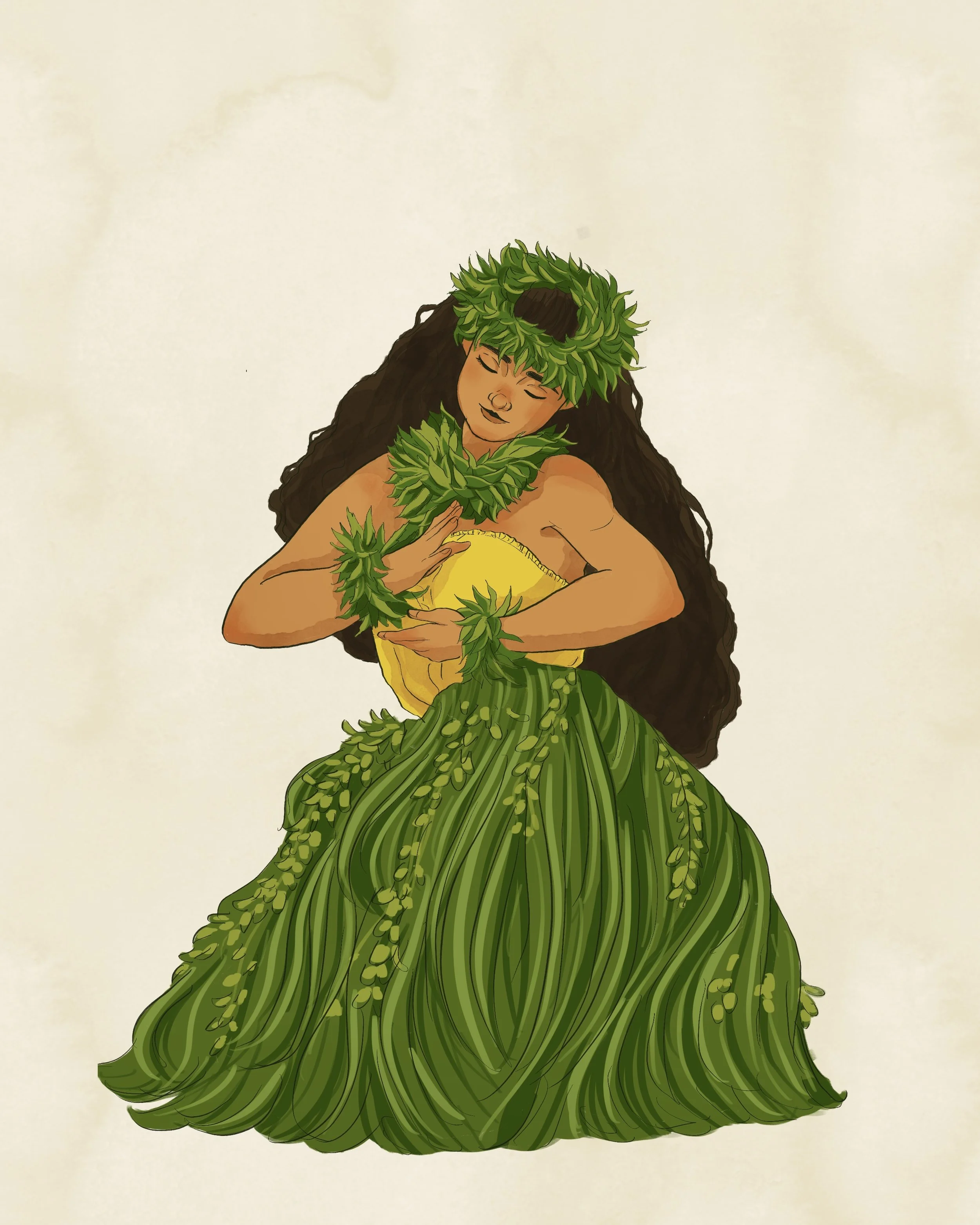
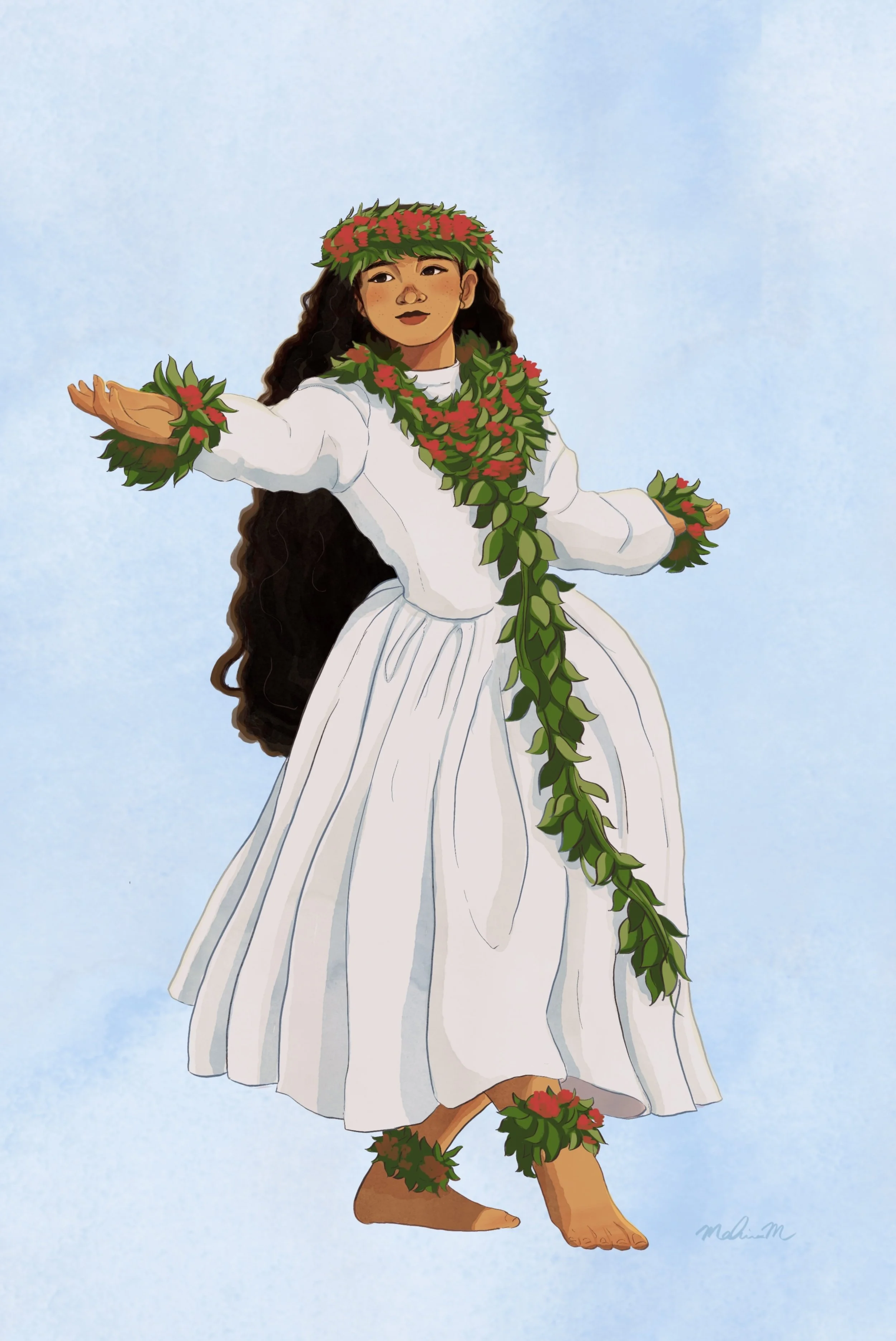
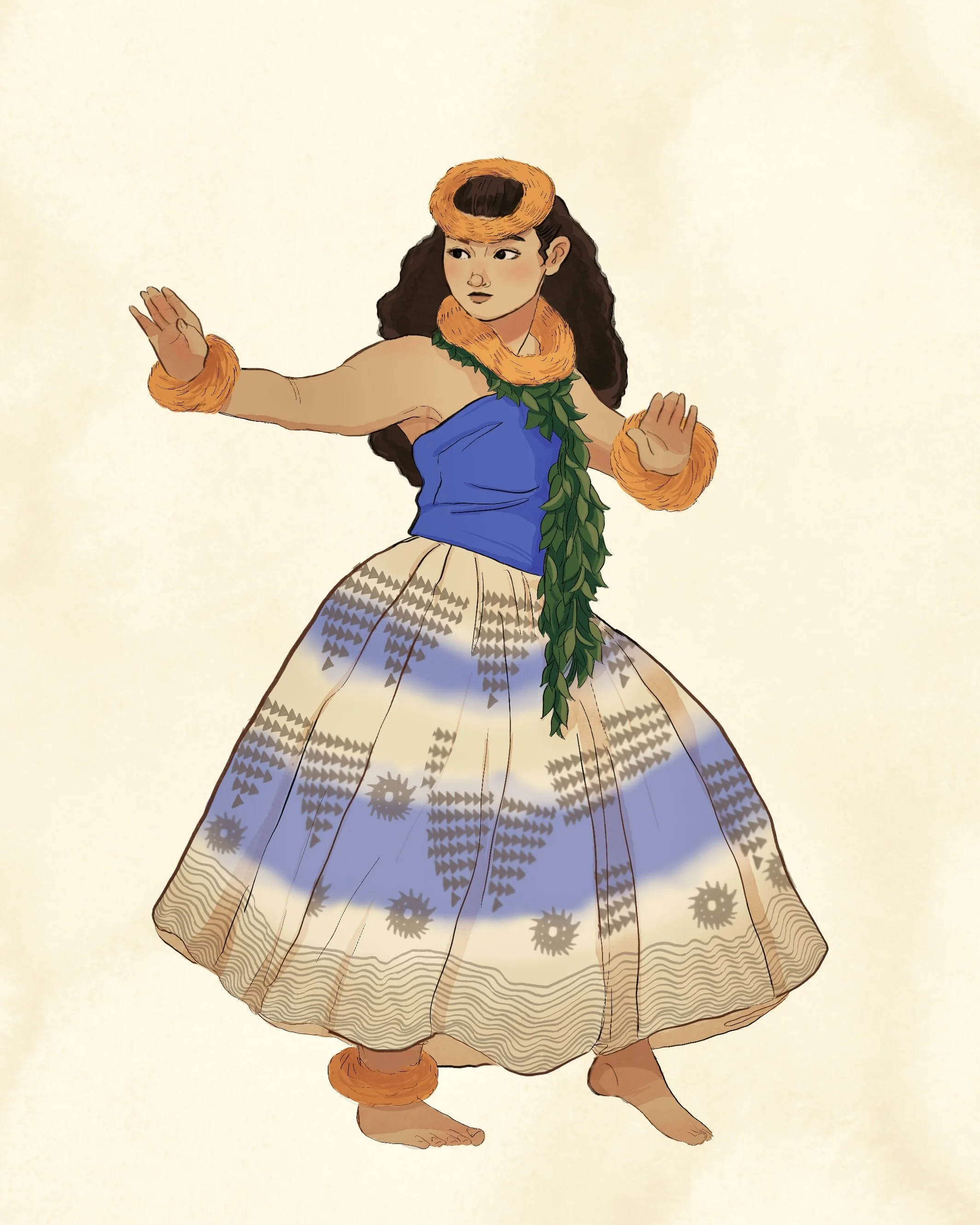
Every year, Hawai‘i holds the Merrie Monarch Festival, our annual hula competition, where hālau hula (hula schools) from across the islands and the continental U.S. come to compete. These illustrations feature some of the dancers who competed this year. After the overthrow of the Hawaiian Kingdom and subsequent annexation of Hawai‘i, hula was used to promote tourism to the islands and was commodified, oversexualized, and stripped of all spiritual significance. During the Hawaiian Renaissance in the 1970’s/80’s, hula was revitalized into its authentic artform. Merrie Monarch has played a huge role in this revitalization and the pride that Hawaiians feel for hula today.
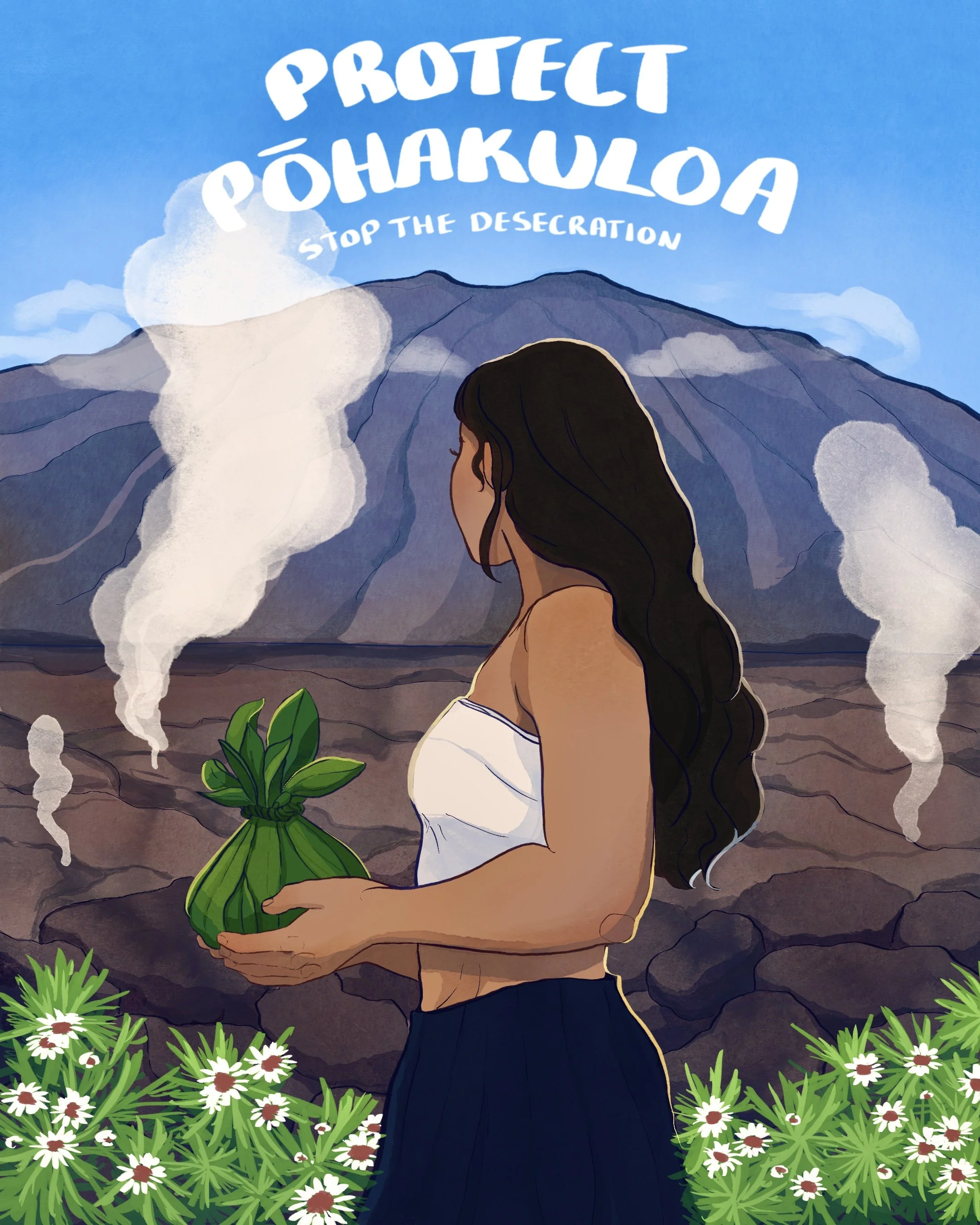
For over 70 years, Pōhakuloa on the Big Island of Hawai‘i has been used as a U.S. military training ground. But since 1964, the military has failed to clean up ordinances and waste — including nuclear waste — which is a violation of their lease. Pōhakuloa is home to endangered plants and animals and Hawaiian burial sites. Despite this, the land continues to be bombed and bulldozed and the voices of Native Hawaiians are ignored. On May 9, 2025, the U.S. Army held a public hearing to ask Hawai‘i’s Board of Land and Natural Resources to accept their Environmental Impact Statement (EIS) so they can renew their lease on Pōhakuloa. But their statement was flawed and significantly downplayed the environmental and spiritual impact of the military’s activity. I created this piece to help raise awareness and encourage the submission of online and in-person testimonies to reject the military’s EIS. Over 1,000 online testimonies were submitted and in-person testimonies and deliberations lasted eight hours. In the end, the Board rejected the Army’s statement — one of the first times that the Board had taken a stand against the U.S. military. While the military will continue to push for lease renewal through different avenues, this was a huge win for Native Hawaiians and a testimony to the power of our lāhui (community).
Mahina Martinson currently works as a designer and illustrator in NYC, with roots in California and Waimea, Hawai‘i. She uses art to raise awareness on issues affecting kānaka maoli (Native Hawaiians) and show an authentic perspective of Hawai‘i through Native eyes. Her work has been featured by Instagram, Feminist, Malala Fund, the United Nations and more. Find more of her art at @hinam.art on Instagram and TikTok.