
Refugee Roots to Community Fruits: The Montrose Nails Story
SINCE 1973, OCA HAS BEEN BRINGING COMMUNITIES TOGETHER from across the country to stand up against hate and discrimination, and to celebrate Asian American culture and heritage. As we begin to take the time to think about where we want to bring these communities in the next fifty years, I want to share with you my story about community.
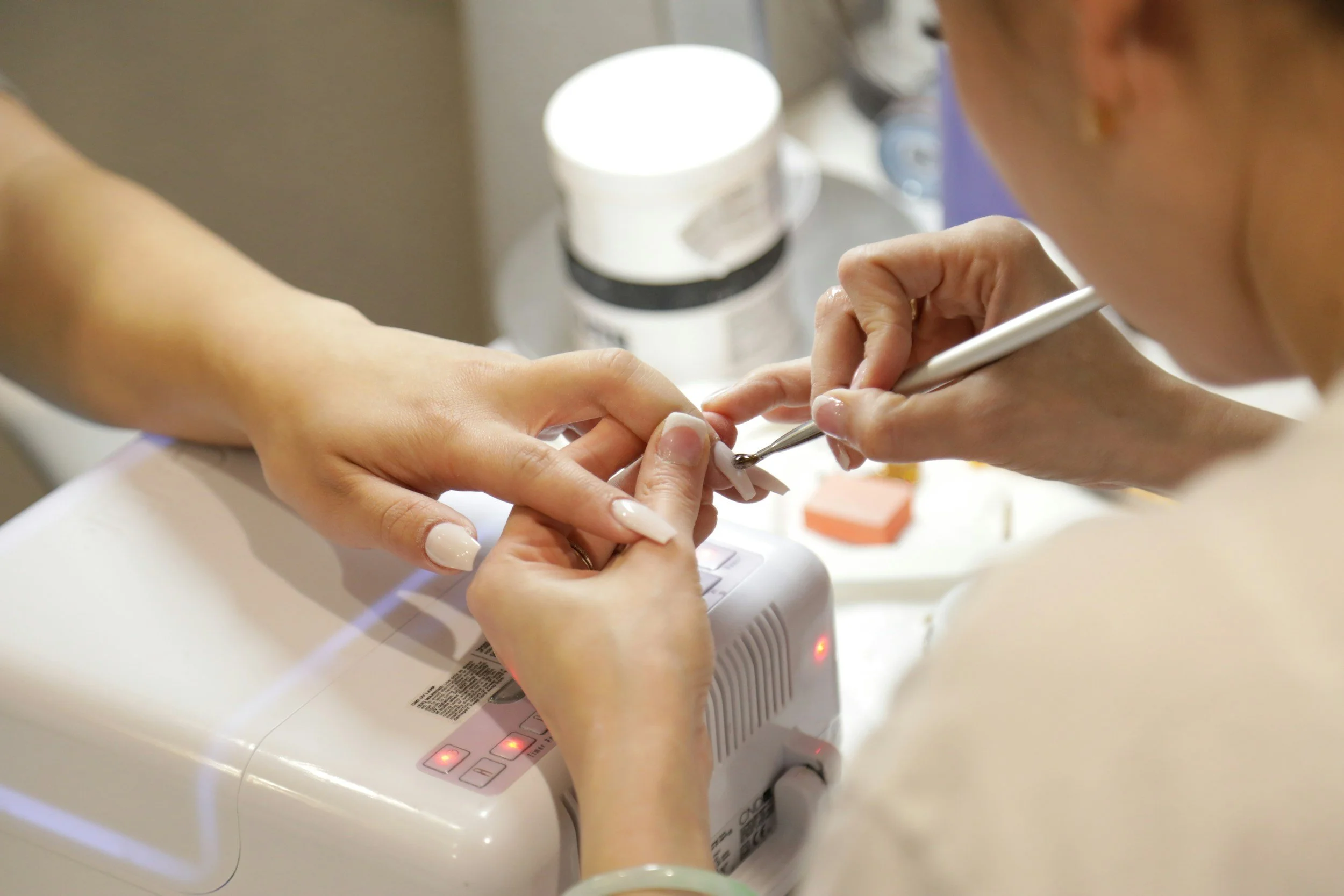
For 351 days of the year, I’m an OCA National employee, and for the other fourteen days, I’m a TX licensed nail technician at my family’s nail salon in Houston.
However, every day of the year, I’m the daughter of Vietnamese boat refugees. My parents came to the U.S. in 1979 as refugees from Hong Kong and the Philippines. My mother and father came from families who struggled to get food on the table by selling various things at street markets, so the prospect of attaining a higher education in America was only in my grandparents’ wildest dreams for their children. When my parents achieved that, both electrical engineers, they faced obstacles they were never warned about in the American refugee camps: the glass and bamboo ceilings.
A fun fact about my dad is that he holds 5 U.S. patents, one of which is for the circuit board that made the first fluorescent light bulbs possible. Yet the company for which he created this for continuously passed over him for promotions. He was an engineer with a masters degree making the salary of an electrical technician. This was a pattern that followed him everywhere he went to work and it got to the point where my parents left the sector to open their own business, a nail salon. Discrimination would then just be experiences that are fleeting and contained inside of a storefront, rather than something institutional that impacts how they are able to provide for their family.
Running a nail salon, like any other small business, comes with its own set of problems of course but having been raised in nail salons, and even helping my family build ours when I was in third grade, I’ve come to realize how much meaning and value the salon holds. Sure, my mom and aunts face discrimination almost every day, and the threat of another mass shooter targeting salons looms over us. Growing up, I’ve watched family members be treated as second class citizens — verbally abused by clients, of all backgrounds, who thought that being a paying consumer of our nail services meant they had power over my family.
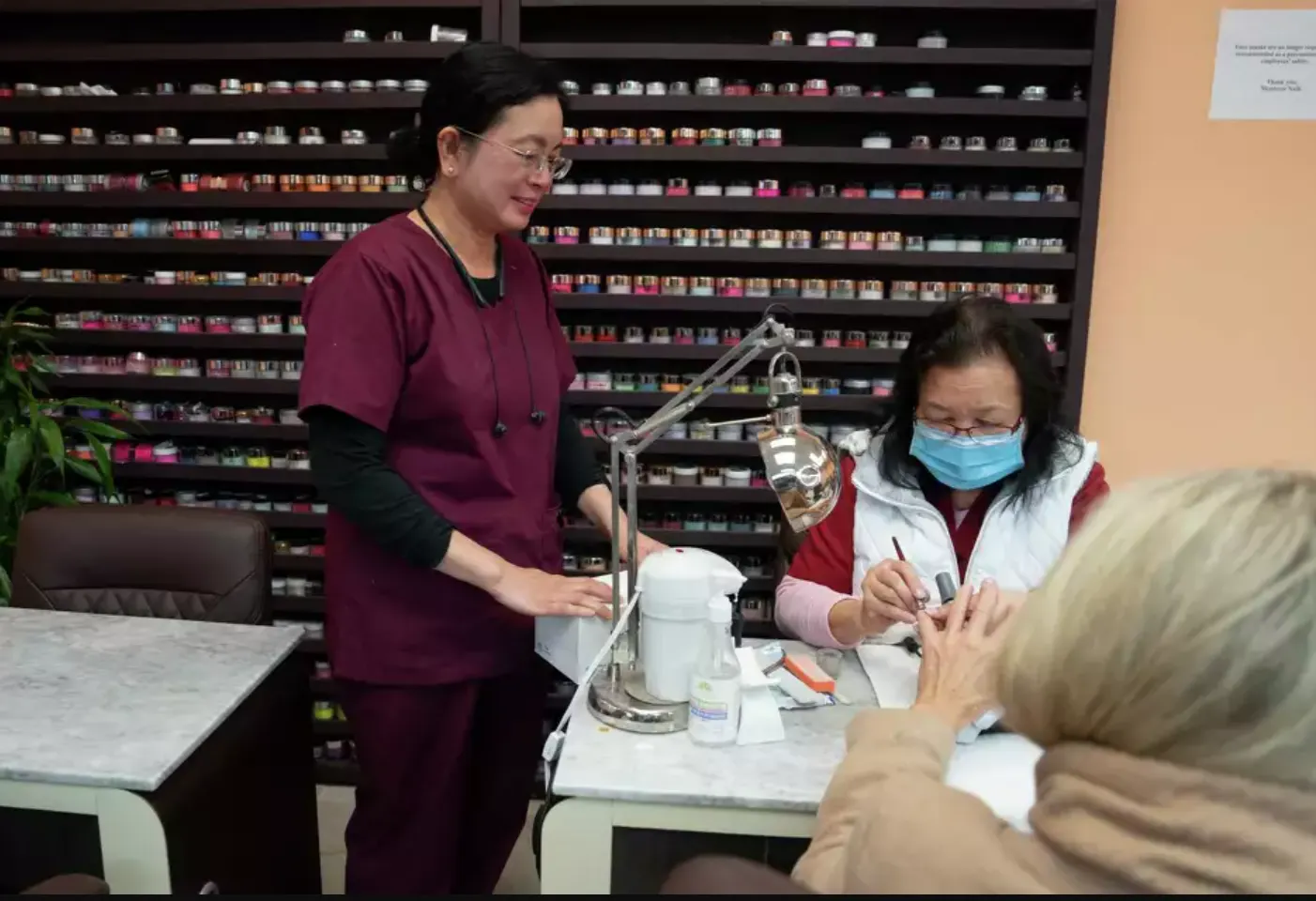
However, the reason why my family and I continue to work at the nail salon is because of all the clients who become close friends and non-blood family. I now have many aunts, sisters, and grannies, even uncles and brothers who are not blood related to me. Our nail salon has been around for 18 years. I saw firsthand how a group of refugee women, many with broken English or none at all, created an environment that facilitated friendships, partnerships, job opportunities, and oftentimes, even free therapy. My mother’s only goal was to make customers happy with a hand massage or nail designs. Little did she know that Montrose Nails would become a community hub.
Since I was nine years old, I have served people much older than me, or even much younger than me. Our clients at the salon are of all different races, gender identities, and even of all class identities. (I mean, having a fresh set of nails is important — some people consider it more important than a gym membership because you can work out on your own at home but you can’t paint the nails on your right hand if you’re right handed.)
“Growing up, I’ve watched family members be treated as second class citizens — verbally abused by clients, of all backgrounds, who thought that being a paying consumer of our nail services meant they had power over my family.”
Many of our own clients hold beliefs that are even contrary to my family’s existence in America. As I got older, I would begin to pick up on nuances of our customer’s identities. What kind of politics they have, religious beliefs, prejudices and misconceptions that they held. Many times, they would be in direct contention with my own beliefs, or perhaps that of a different customer’s. Yet, despite the vast differences among all of the people who are in our nail salon at any given moment, there always is a sense of unity and community among them. There are always bystanders who engage to defend my family when someone is verbally abusive. People teach each other new recipes, give dating advice, or share recommendations for doctors or tutors.
My aunts and I learn new things every day in the nail salon, and so do our customers. We learn from each other — about our different foods and cultures, histories and journeys, languages and customs. My mom and I host an anniversary luncheon every year where we cook home style Vietnamese food for our regulars. The first few years, well actually, even these days, we have clients who discover fish sauce chicken salad or peanut sauce and spring rolls. On the other hand, these Vietnamese ladies now have huge hankerings for enchiladas, gyros, and pastrami sandwiches.
Our clients and my family also learn about our commonalities — their love for Costco deals and McDonald’s McRib season, their shared struggles with raising queer children in the Houston suburbs or taking care of their elderly parents while working full-time jobs, their concerns about being immunocompromised during the pandemic or victims of the next mass shooting. And perhaps some of the most important things we learn from each other are our parallels — the common struggles that are similar but not entirely the same about healthcare coverage and Medicaid, about being racially profiled by police or not being taken seriously by police, not being able to reunite with family because they live across the country or because their visa is still stuck in the backlog since the 1970s.
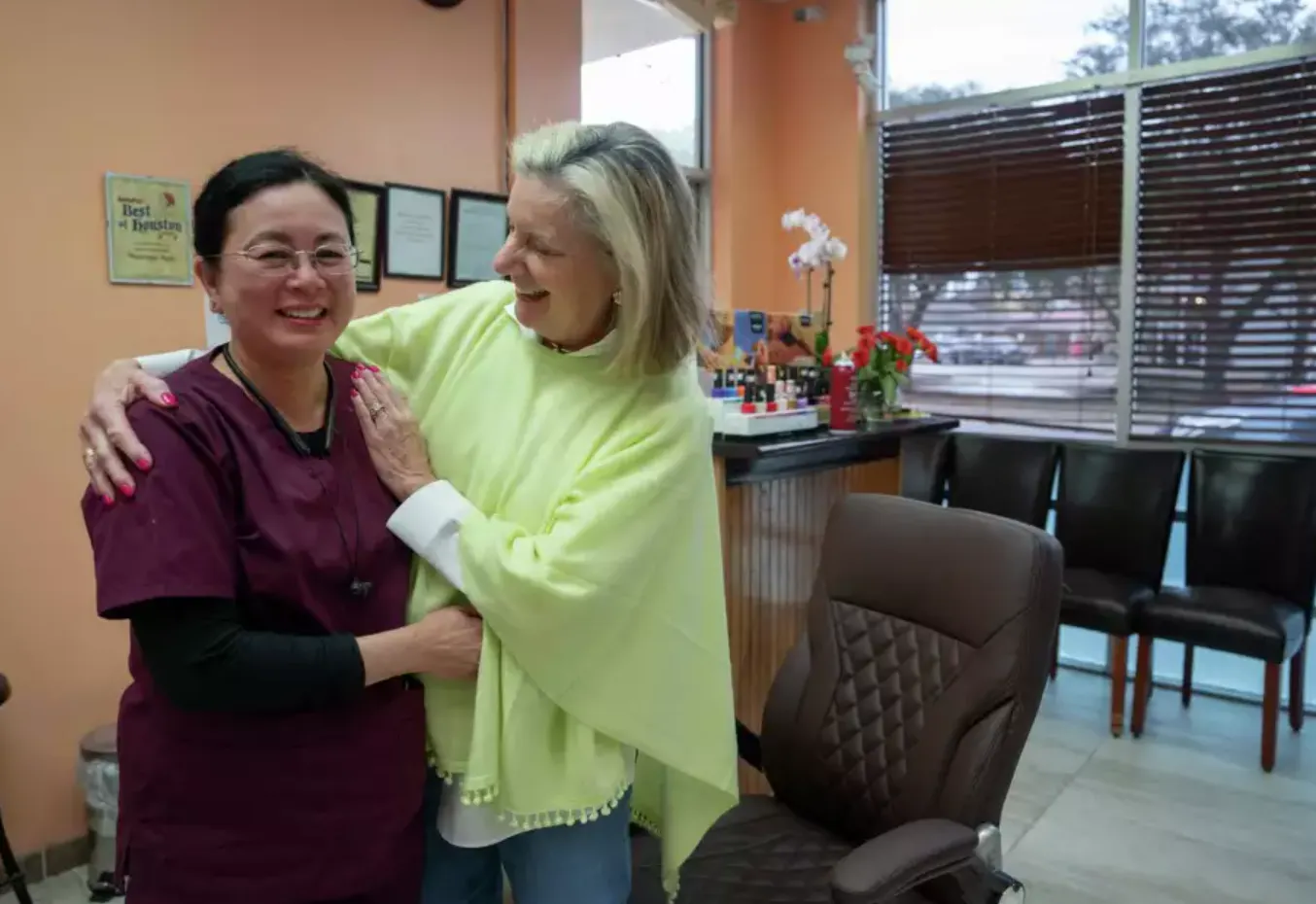
Through what I have just described, I’m sure you can imagine how deep and impactful the relationships formed in the nail salon can be. Having been open for 18 years, we have grown up and grown old with many of our customers. From the outside, you would look in and see a group of strangers, but inside we know that we are all family here. The nail salon has become more than just a place of cosmetic services, it has become a community.
This life experience guides and inspires me to build community with OCA. We impact and inspire youth through our programs and scholarships. We touch the hearts of our community elders and bring together young adults to get to know their own community through our cultural and social events. The key action here is that OCA facilitates relationships, across class, ethnic, or age groups. OCA is where you can find advice and opportunities. OCA is where you can make friends, discover mentors, or even find a chosen family.
While we are a legacy social justice institution (the second oldest national Asian American civil rights organization in the country), and our political power is one of our most important strengths, we are also an entity which people can turn to for support, allyship, and comfort. So when I think about the challenging work of bridging digital and economic divides, or stamping out discrimination, I maintain hope and comfort in each and every relationship that I make, that you make, that each OCA chapter creates and develops. Because that is building a strong community.
Thu Nguyen is the executive director of OCA - Asian Pacific American Advocates.