Community Representation: OCA-St. Louis’ Origin
By Peter Tao
WHEN AND WHY IS REPRESENTATION WITHIN A COMMUNITY NEEDED and what form does it take or look like? This is not a static question or thought, as it always needs to evolve with the community and signs of the times. Regarding representation, it can come in a range of actions, from advocating, to activism, to mentoring, to simply being supportive and lending a hand. There is no prescribed way. We do what we can.
So how does representation relate to our OCA community?
We shouldn’t need to be reminded of the fact that Asian Americans (most specifically Chinese, but also Japanese and Filipinos) had not been widely welcomed from the mid-1800s to the early-1900’s. If you didn’t know about this, “Google” it.
Then, in our more modern era, the 1940s to 1970s came the dark, race-related clouds that continued to hang over many Asian Americans, including fears of Japanese “Americans” during WWII, McCarthyism and the Red Scare, the importation of Japanese cars, and loss of jobs. Do these themes sound familiar?
And of course, there is a very long-standing history of discrimination of the African American community, leading to the birth of the Civil Rights movement in the 1950s.
Those trying times and ongoing occurrences led to a reaction and action by the Chinese American community, with the formation of the Organization of Chinese Americans (OCA). A history that we individual chapters should all know, but more importantly, understand why and the greater context of those times and how they may translate to our times now.
So, how does St. Louis fit into this? The St. Louis story is one that translates to many chapters.
For context, before St. Louis formed an OCA chapter, the St. Louis Chinese community was changing and growing like many, starting in the 1950s with increased students and new professionals. And with this increase in population, and the hovering race-related cloud of discrimination and barriers, this Chinese American community, like generations of other immigrants before them, sought a place to come together for advice and camaraderie in a safe environment. It should be noted The 1882 Chinese Exclusion Act was still in effect.
With a growing network, the St. Louis community would become more comfortable, confident, stronger, and more connected. Its local (volunteer) leaders felt it was time to stand proud, become more visible, and begin the process of educating and advocating, reminding people that Chinese Americans were as much a part of the St. Louis society. Chinese Americans are “Americans.”
The OCA’s logo was selected through a design contest organized by the St. Louis Chapter. The winner was Jinee Dunn, a young Chinese-Thai student at Washington University.
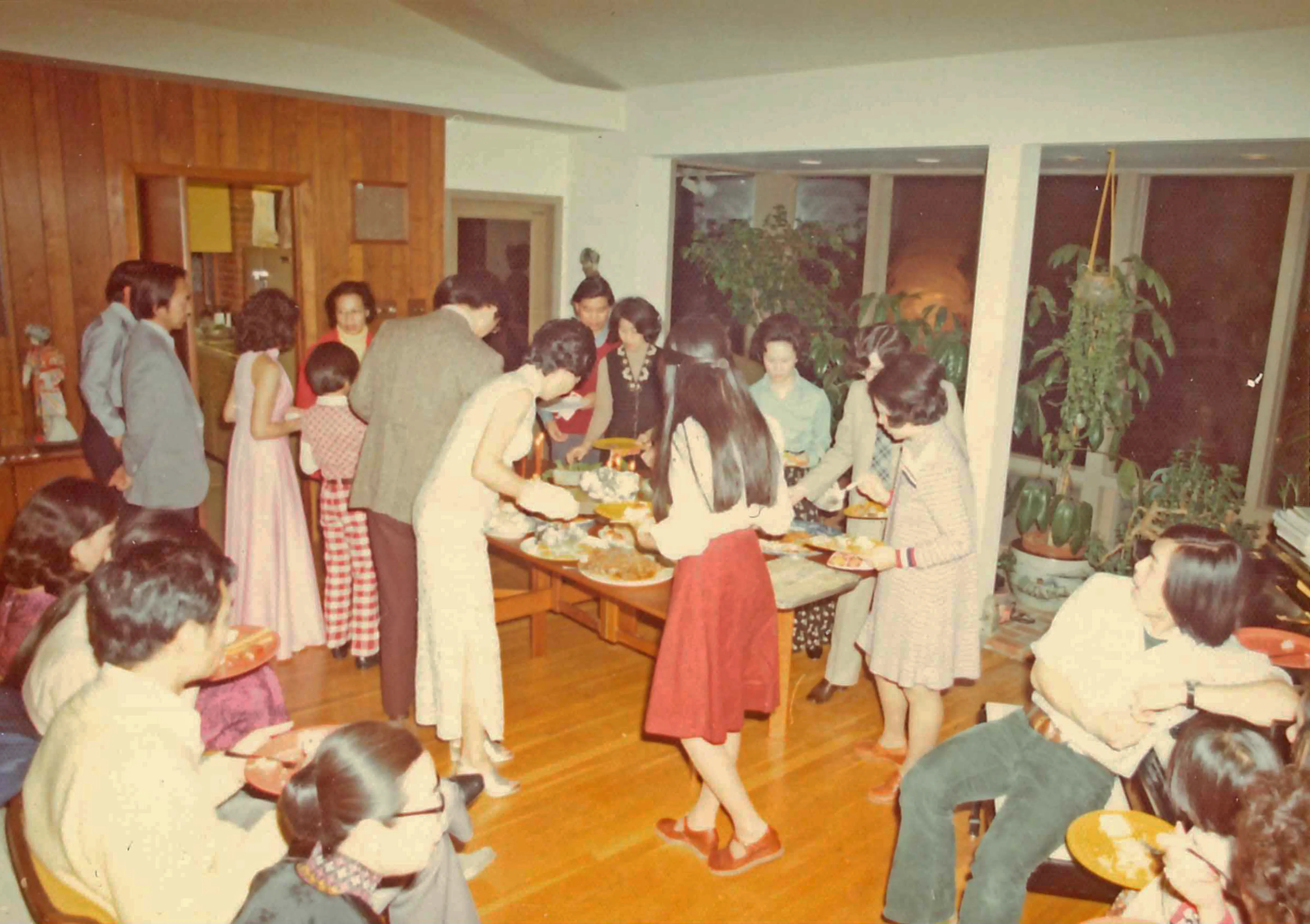
So, a small group of St. Louis Chinese American leaders gathered for their first meeting with K.L. Wang in late 1971 (at the home of William and Anne Tao) to discuss the need for a united, representative voice. And, as a result, the League of Chinese Americans was formed in St. Louis in early 1972. Then in 1973, OCA St. Louis became a Founding Chapter.
As the U.S. Asian American community continued to grow and become more diverse, in 2013, it was decided to rebrand to be OCA-Asian Pacific American Advocates and advocate on behalf of Asian Americans and Pacific Islanders, dedicated to advancing the social, political, and economic well-being of “AAPIs” and now, Asian American Native Hawaiian Pacific Islanders (AANHPI).
OCA STL Gala with Mayor Tishaura Jones
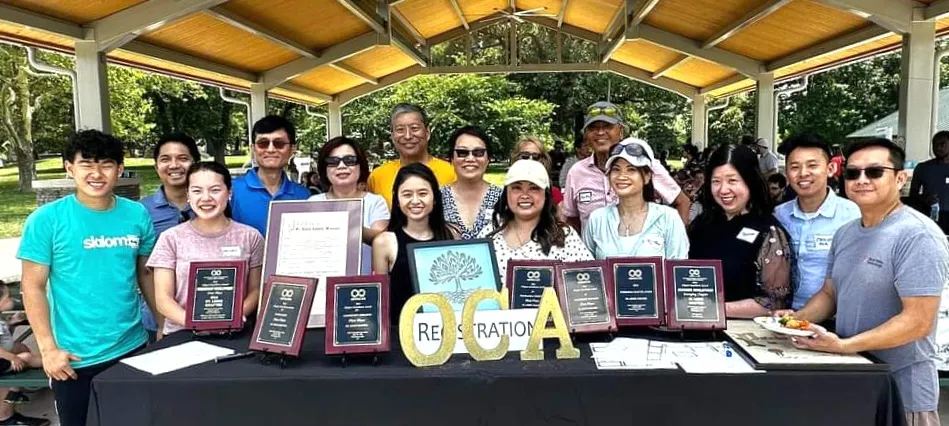
The chapters are the engine of OCA. With every OCA chapter, success rises and falls depending on our volunteer base; it is tough running a volunteer board-based non-profit. That said, we all do all that we can, as best as we can. And, as OCA and chapters have evolved to the changing times and the influx of other AAPI organizations, the interaction of the national and chapter Community becomes more important. We must feed off of each other and share resources. This starts with getting to know each other better. OCA St. Louis is and must evolve too.
While putting on structured programs is stressful and takes a lot of time commitment, we felt we needed to elevate the awareness of the strong, diverse AANHPI women in our community. We had 8 panelists, a moderator, and a keynote speaker, and we created a safe and comfortable setting to hear stories, for dialogue and learning, and then socialize afterward.
On May 6th, 2023, our St. Louis Chapter of OCA Asian Pacific American Advocates celebrated our 50th Anniversary, as one of the oldest Asian American advocacies and civil rights groups in the country. It was a joyous evening celebration of Diversity and Alliances.
Peter Tao is the current board president of OCA St. Louis and an advocate for AANHPI representation, including being a chair of the advisory committee for the Missouri Historical Societies Chinese American Collecting Initiative, where he is also a researcher, writer and lecturer. Peter was an executive producer of a documentary, DAY ONE, which highlighted how a community comes together to be a Welcoming Community for new immigrants and refugee students. Peter is the son of William Tao, one of the founders of OCA-St. Louis.