
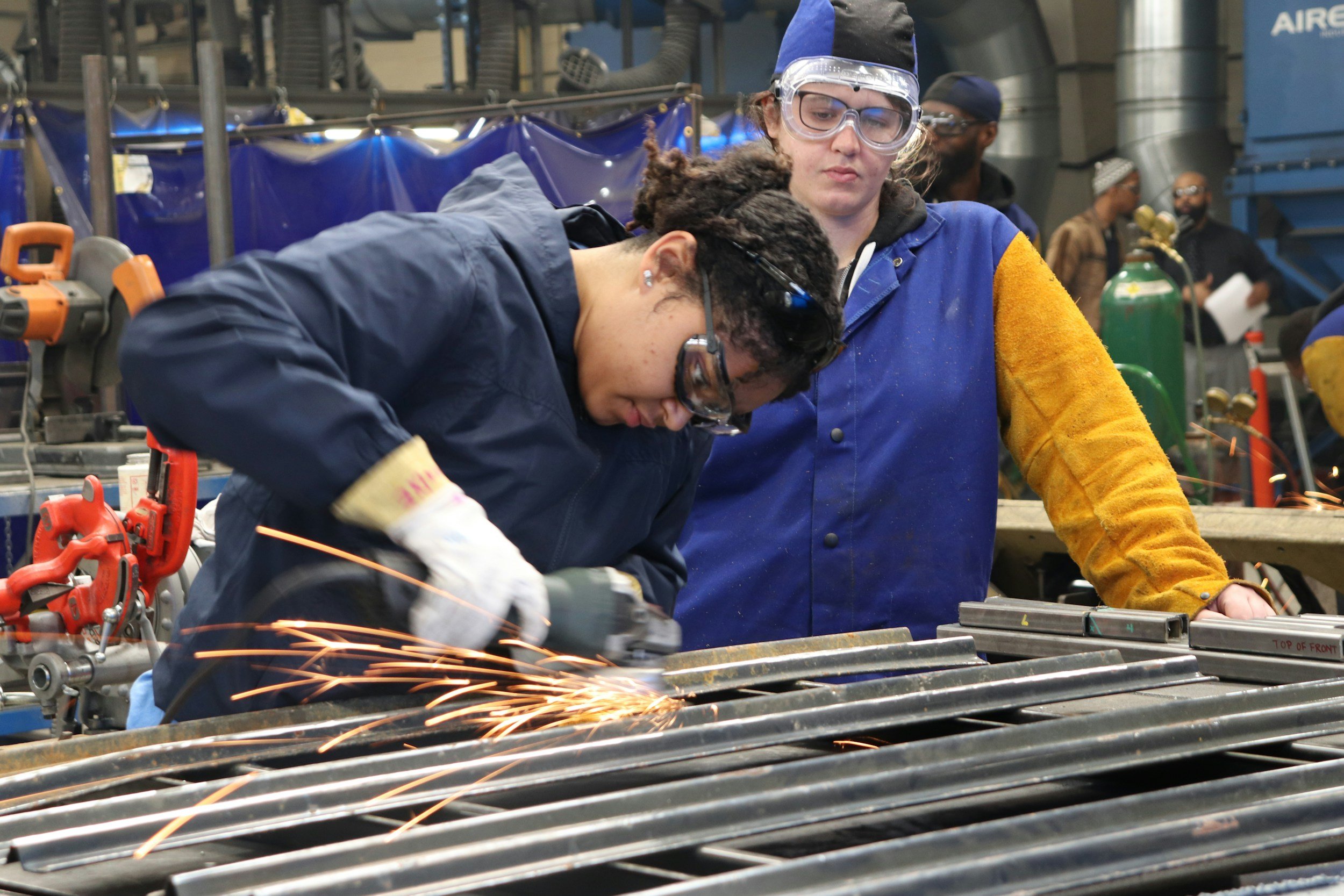
Joe and Loanne Chiu Vocational Scholarship
A traditional four-year college degree is not always the right path, nor an accessible one, for everyone. The Joe and Loanne Chiu Vocational Scholarship provides $2,500 to students pursuing an alternative path through vocational programs.
Scholarship Status: Applications are open
The deadline to apply is Friday, May 22, 2026 at 11:59 PM PT
Scholarship Details
Scholarship Award: $2,500
Two scholars will be awarded $2,500 each.
The award will be sent directly to recipients via ACH or check and it will be considered a taxable income; OCA will send a 1099-NEC form to you at beginning of the following year, meaning you/your family will need to include it in the next tax filing season. Scholars will be asked to complete a W-9 form to receive the award.
Scholarship Requirements:
Scholarship recipients will be required to complete one report per year during their vocational studies providing updates on their academic progress. Reports will be submitted via a form provided by OCA.
Eligibility
Applicants must be pursuing a degree/certificate program at a vocational school (or equivalent post-secondary institutions) starting in 2027. Awarded scholars will be required to submit proof that they’ve been accepted into a vocational or similar post-secondary institution.
Applicants must be first-gen, meaning their parent(s)/guardian(s) did not earn a bachelor’s degree or higher.
Applicants are still eligible if their parent(s)/guardian(s) have graduated from a vocational school or similar post-secondary institution but did not go on to earn a bachelor’s degree or higher.
Applicants must have a 2.5 or higher high school GPA.
If you do not have a high school GPA because you did not graduate high school, you must be able to provide your GED or state-authorized equivalent credential.
Applicants must be a U.S. citizen or have legal permanent resident status in the U.S.
Applicants must not be a child or dependent of:
an OCA National staff member,
an OCA Executive Council member,
or an OCA Business Advisory Council member.
Application Requirements
Short Biography (300 words max).
Your short biography should adequately introduce yourself to anyone reading it, describing your background, experiences, interests, etc. This info will be used on our website if you are selected to be a scholar. If you’d like to see examples of what this short biography should look like, please refer to the scholarship bios webpage.
High School Academic Transcript (in PDF format; unofficial transcripts are also accepted)
If you have graduated, or will soon be graduating, from high school, you must upload your high school transcript and it must include the first quarter or semester of your freshman year of high school through at least the final quarter or semester of your junior year of high school.
If you have not graduated, or will not graduate, from high school, you must provide a GED or state-authorized equivalent credential instead of an academic transcript.
Experiences
There will be a section in the application form asking you to provide details on three types of experiences you may have:
Leadership experience
Community Service/Volunteer experience
Employment/Work experience
For each type of experience, you can list up to three of your most prominent and relevant experiences. It’s okay if you don’t have experiences in all three categories because everyone has different circumstances.
Two (2) Short Answer Response (300 words max each)
Short Answer Prompt 1: Explain why you decided to pursue a vocational program instead of a traditional college route.
Short Answer Prompt 2: What are you planning to study in vocational school and why? What are your personal and professional plans/goals after you complete your program?
One (1) Essay Response (in PDF format, 500 words max)
Essay Prompt: Describe the individuals and/or experiences that have shaped you into the person you are today. What did you learn from them, and how have they influenced how you navigate the world today and in the future?
Two (2) Professional References
Include their name, job title/position, email, phone number, and their relationship to you.
References must be able to describe their experiences with you in a professional capacity. We may contact one or both of your references if we determine the need to ask them about you and your application.
Please note, this scholarship is not asking for a letter of recommendation.
Frequently Asked Questions
Tap on a question to see the answer. If you have a question not covered in the FAQs, contact Kent Tong at kent.tong@ocanational.org.
-
For this scholarship, first-gen means your parent(s)/guardian(s) did not earn a bachelor’s degree or higher.
-
Yes. Being a first-gen student means that your parent(s)/guardian(s) did not earn a bachelor’s degree or higher . Your sibling(s) would also be considered first-gen.
-
Vocational school is an umbrella term for any post-secondary institution that provides career-focused, hands-on training to prepare students for a specific job or trade.
Trade schools are a type of vocational school that focuses on teaching the specific skills required for a particular craft or career. These programs are often short-term, ranging from a few months to two years, and lead to a certificate, diploma, or associate degree. Trade school students receive hands-on training that prepares them to enter the workforce immediately upon graduation. Trade school programs typically include fields such as welding, HVAC, automotive repair, plumbing, or electrical work. These are jobs that rely on manual skills and technical know-how. Trade schools are ideal for learners who want to start working quickly and prefer a direct, practice-based education over traditional academics. (Source)
Technical schools are a type of vocational school that offer associate’s degrees and certain certifications that are necessary to enter technical job fields. Unlike four-year colleges and universities, these programs can often be completed in just 1-2 years and for half the typical tuition. Students also don’t spend the first half of their program learning broad “core curriculum” knowledge. Instead, they start off learning applied knowledge and skills that directly translate to their chosen career field. Students who go to technical schools may still need to complete a training program, apprentice program, or an entry level position before they can work in career positions that allow them to employ the full range of skills they learned. However, this is not always true, as some associate’s degrees and technical certifications allow a graduate to begin working immediately. (Source)
-
Examples of high school equivalent credentials include the general educational development (GED), high school equivalency (HSE), high school equivalency test (HiSET), or similar state-authorized equivalent credentials.