
OCA Intern Alum: Steve Lin
Interview by Jesse Wu / Written by Amelia Lagna and Kent Tong
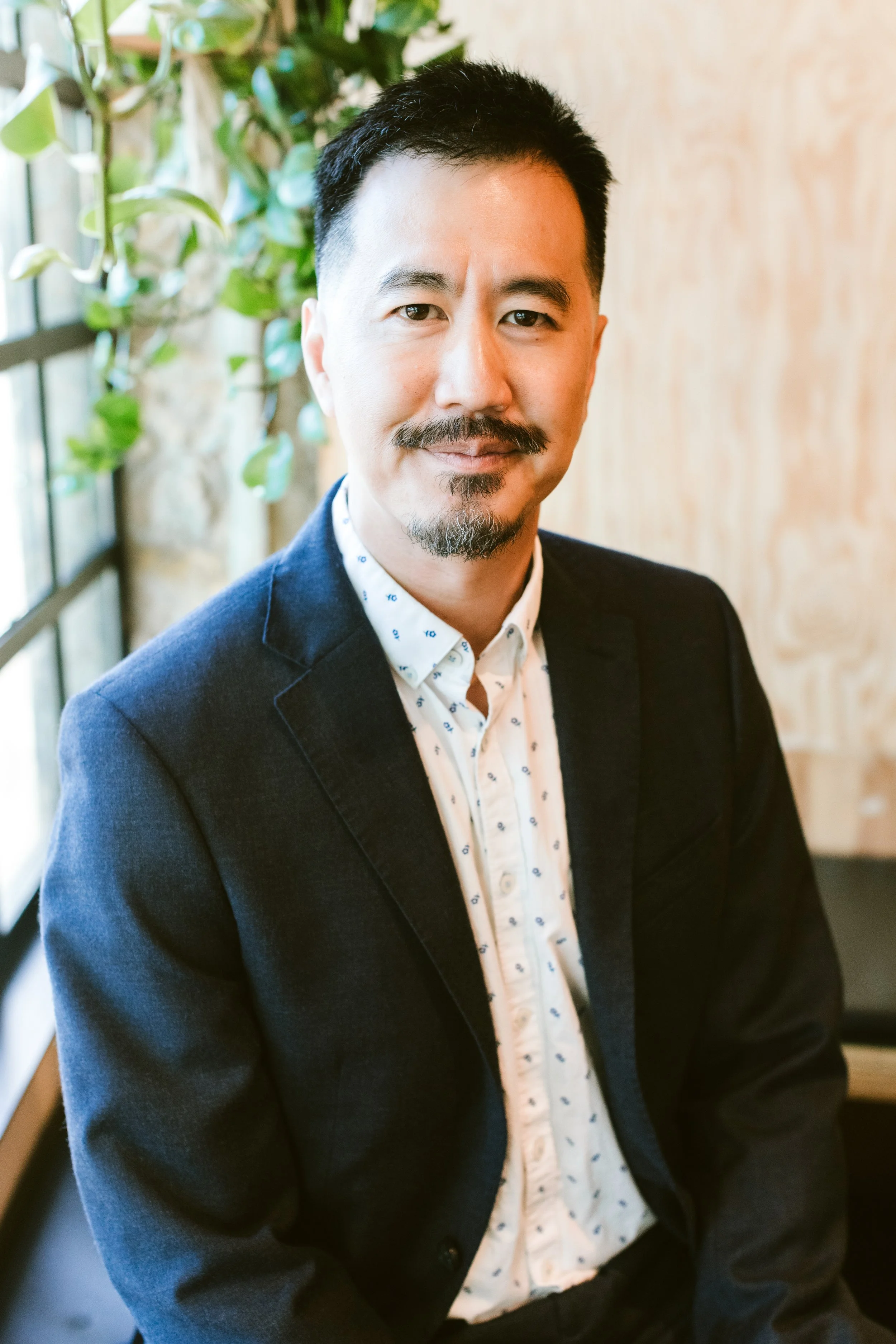
HE MAY NOT HAVE UNDERSTOOD AS A COLLEGE STUDENT, but Steve Lin would have benefited from a mentor. That bold and naive 20-something-year-old thought himself a revolutionary, impatient for change, wanting to turn “the system” upside down. “Slow down, young buck,” he would say to his younger self. “I know you want to make change, but let’s talk a little bit more about what that looks like and the pathways to make those changes happen.”
Lin grew up in Port Clinton, Ohio, and started undergrad at the University of Cincinnati, where he had difficulty finding a community on a campus that lacked Asian Americans. He transferred to Hampshire College in 1997, where the school’s uniquely interdisciplinary approach—one with no majors, tests, or grades—allowed him to design his own curriculum that involved Asian American studies and literature, history, critical race theory, media representation, cultural anthropology, and law. Learning how all of this intertwined gave him the language to understand his Asian American experience and institutional inequities. With this newfound passion for social justice, he sought an internship with an Asian American advocacy organization and became an OCA summer intern in 1998, placed at the U.S. Commission on Civil Rights.
At the commission, Lin remembers partaking in an exercise to interpret the text of a religious freedom bill that had just been introduced. “I read the bill and I was like, ‘It seems okay, it seems pretty neutral on its face,’” he says. But then his supervisor broke it down for him: “He’s like, ‘You need to know the person who’s proposing it and some of the history that they had before that. And, using all of those context clues, this is actually what the text is saying.’” This lesson has made him a more informed citizen capable of thinking thoughtfully about legislation.
Taiwanese sovereignty was another big topic, which Lin was personally invested in since his parents are from Taiwan. He tracked politicians’ stances and learned he shared the same support for Taiwan's independence and democracy as many elected officials he didn’t politically align with. It taught him the necessity of compromising and finding allyship with those on the other side of politics. “That was a very informative experience, being like, Hey, you know, sometimes issues make for strange bedfellows,” he says.
OCA summer interns with Assistant U.S. Attorney General Bill Lann Lee (1998)
Though Lin enjoyed his internship, he realized working in national politics was not for him—he didn’t like how slowly change occurred. Instead, he wanted to do work at the grassroots level, but what that looked like, exactly, was still up in the air. What he remembers enjoying, though, was facilitating workshops for high school students at OCA’s National Convention. “That was one of the highlights for me, being able to be entrusted with that session,” he says, “and just trying my best to preach the gospel of Asian American studies and the power it has to help us understand where we’ve been and where we are currently.”
Post-grad, Lin worked on-and-off as a contractor for OCA, facilitating college workshops, on top of his day jobs. After a decade of this, fellow facilitators Yen Ling Shek and Connie Tingson Gatuz pointed him in a new direction: “They’re like, ‘Steve, you keep coming back to these programs. You’re pretty good at it. This is a career path. You can do this in student affairs.’ I was like, ‘Student affairs? What is that?’ And they’re like, ‘Get a master’s degree in it. It’s like doing this work 365 days a year.’” He earned his master’s degree in student affairs from the University of California, Los Angeles in 2012 and has been fostering the leadership and identity development of students ever since at institutions like UCLA and the University of Michigan-Ann Arbor.
Steve Lin (right) with students at Cal Poly Pomona
Currently, as the senior coordinator for Male Success Initiatives at California State Polytechnic University-Pomona, Lin develops and manages initiatives that support the retention and graduation of students that are culturally relevant and specific. Many of the students are low-income and children of immigrants who benefit from clear, equitable access to information and resources to thrive in college. As proof of the necessity of this work, he points to reports from U.S. News & World Report that have consistently ranked Cal Poly Pomona as one of the top schools for social mobility. “It’s been really awesome to be in this work and supporting students in this way,” he says.
His role also involves mentoring male students and having them think more critically about masculinity. “My hope is that we are in the process of creating more comprehensive men, that we are deconstructing what that is,” Lin says, “and hopefully broadening what it means to be a man, that we can be men of discernment.” At a time when the manosphere is widespread and online influencers like Andrew Tate and Myron Gaines spew misogynistic and toxic views of masculinity to millions of impressionable boys, his work is invaluable. “We don’t have to be so stoic. It’s okay to be emotional,” he says. “It’s actually healthy and required for our families, being examples for our children, for our partners, for our community members, that we can be emotionally vulnerable.” Nearly three decades after he was once in his students’ shoes, Lin has become the mentor he wishes he could have had growing up—creating positive change.