
OCA Intern Alum: Nicholas Wu
Interview by Jesse Wu / Written by Isabella Vaka and Kent Tong
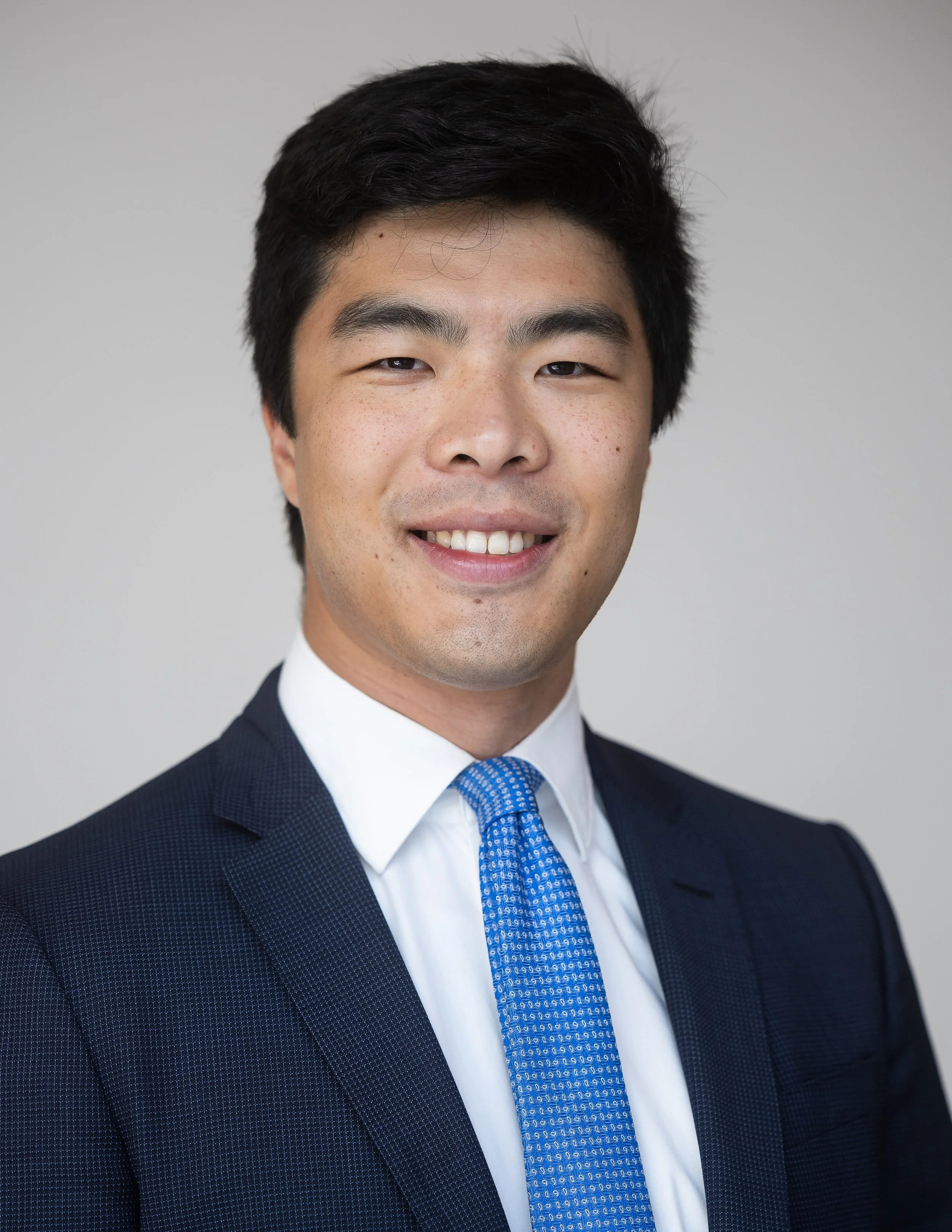
NICK WU GREW UP IN THE SUBURBS OF DETROIT, the grandson of Chinese immigrants who came to the U.S. after the fall of the Nationalist government of China in 1949. Driven by the privilege afforded by his family’s successful immigration story compared to other families who were not as lucky, Wu understood the importance of political representation and activism within the Asian American community. He was inspired by local figures like Grace Lee Boggs, the Chinese American activist regarded for her decades-long commitment to cross-racial solidarity while fighting for labor and civil rights. When he started undergrad at Princeton University, majoring in the Woodrow Wilson School of Public and International Affairs and minoring in East Asian studies and American studies, he was inspired by Boggs to engage in Asian American activism on campus. He became co-president of the Princeton Asian American Student Organization, one of the largest Asian American student groups on campus, spearheading efforts to establish an Asian American Studies program.
At Princeton, Wu was also the senior columnist for The Daily Princetonian, the school’s independent student newspaper. He learned how to cover complicated issues objectively, “only writing a column when I am sure of the truth in a story,” he says. He would also spend a couple of summers interning at the office of Rep. Sander Levin, working alongside legislative aides on a diverse slate of policy issues, including food safety and Iranian nuclear sanctions.
With his experience in local advocacy, Wu sought an opportunity on a national level, which led to his applying to OCA National’s summer internship program in 2016. He had already been involved with the Detroit chapter (the Association of Chinese Americans) as a high school student, stemming from his parents’ involvement with the chapter, and the OCA National internship struck him as the unique opportunity that could “blend my interests in Asian America and Asian American advocacy and public policy in the U.S. government.” He had a memorable summer filled with many intern events and networking opportunities, which he made sure to take advantage of. (These events were usually catered. “Free lunch never hurts,” Wu jokes.) His fellow OCA interns were “a very fun group of people,” he remembers. “It was a very nice experience to know that there was this group of, if not necessarily like-minded, but similarly motivated, people who all wanted to be in Washington, D.C. and worried about policy and advocacy and really deepen their connections in the AAPI space.” He became good friends with many people in his cohort, many of whom he's still friends with today.
A highlight for Wu was attending the OCA National Convention, which was held in Jersey City that summer. “It was a very powerful experience,” he says, because it allowed him to learn about OCA’s history, the people who’ve come through the organization, and the continued involvement of former OCA interns—whether they’ve come back as OCA leaders, helped organize conventions, or helped other interns with their careers. He realized OCA wasn't just an internship program, but that it was also a community. “It was a helpful thing to see.”
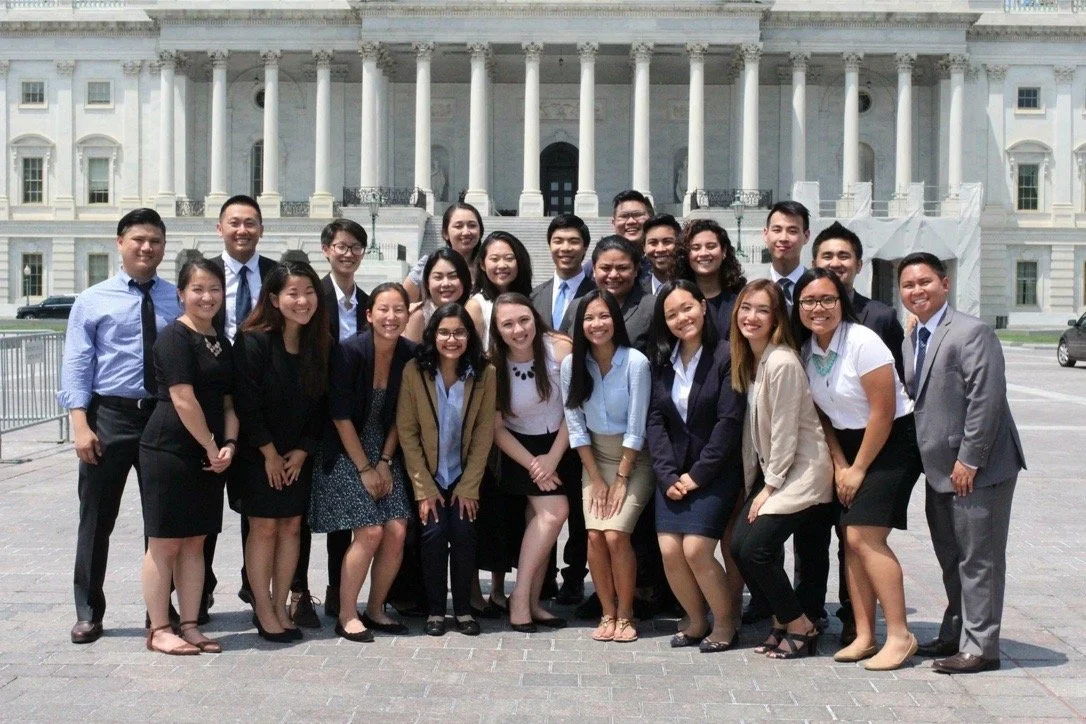
Nick Wu (back, center) with OCA National staff and interns at Capitol Hill
For the OCA internship, Wu was placed to work at the U.S. Senate Committee on Health, Education, Labor and Pensions (aka the “HELP Committee”). There, he worked with the committee's minority party—the Democrats, chaired by Senator Patty Murray—doing press-adjacent work, such as writing memos, compiling press clips, drafting social media content, as well as helping with press releases. His academic coursework was all about public and domestic policy, so the placement site seemed perfectly suited for him, allowing him to see the real-world implementation of his studies on Capitol Hill.
Nick Wu recording comments from House Speaker Mike Johnson (Photo Credit: Francis Chung/POLITICO)
After graduating from Princeton, Wu became a fellow for the National Journal doing policy research. Afterwards, he worked at USA Today as a politics reporter and then congressional reporter. Today, he’s a congressional reporter for POLITICO, with a focus on the House of Representatives. This involves a daily mixture of speaking with sources, interviewing members of Congress, getting a read on what’s happening on Capitol Hill, and writing stories. In his nearly five years covering Capitol Hill, he has written about President Trump’s impeachment trials, Congress's response to the COVID-19 pandemic, debates over President Biden’s legislative agenda, and the 2024 election. He’s broken news about the January 6th Committee, House committee and leadership changes, and more. As an OCA intern, he got a behind-the-scenes look at how members of Congress interacted with the press. Now, as a reporter on the opposite side of that dynamic, Wu gives credit to his time at OCA—the early exposure and deep dive into Congress that the internship afforded him “helped set me on the trajectory that I’m on today.”