
OCA Intern Alum: Julie Su
Written by Isabella Vaka and Kent Tong
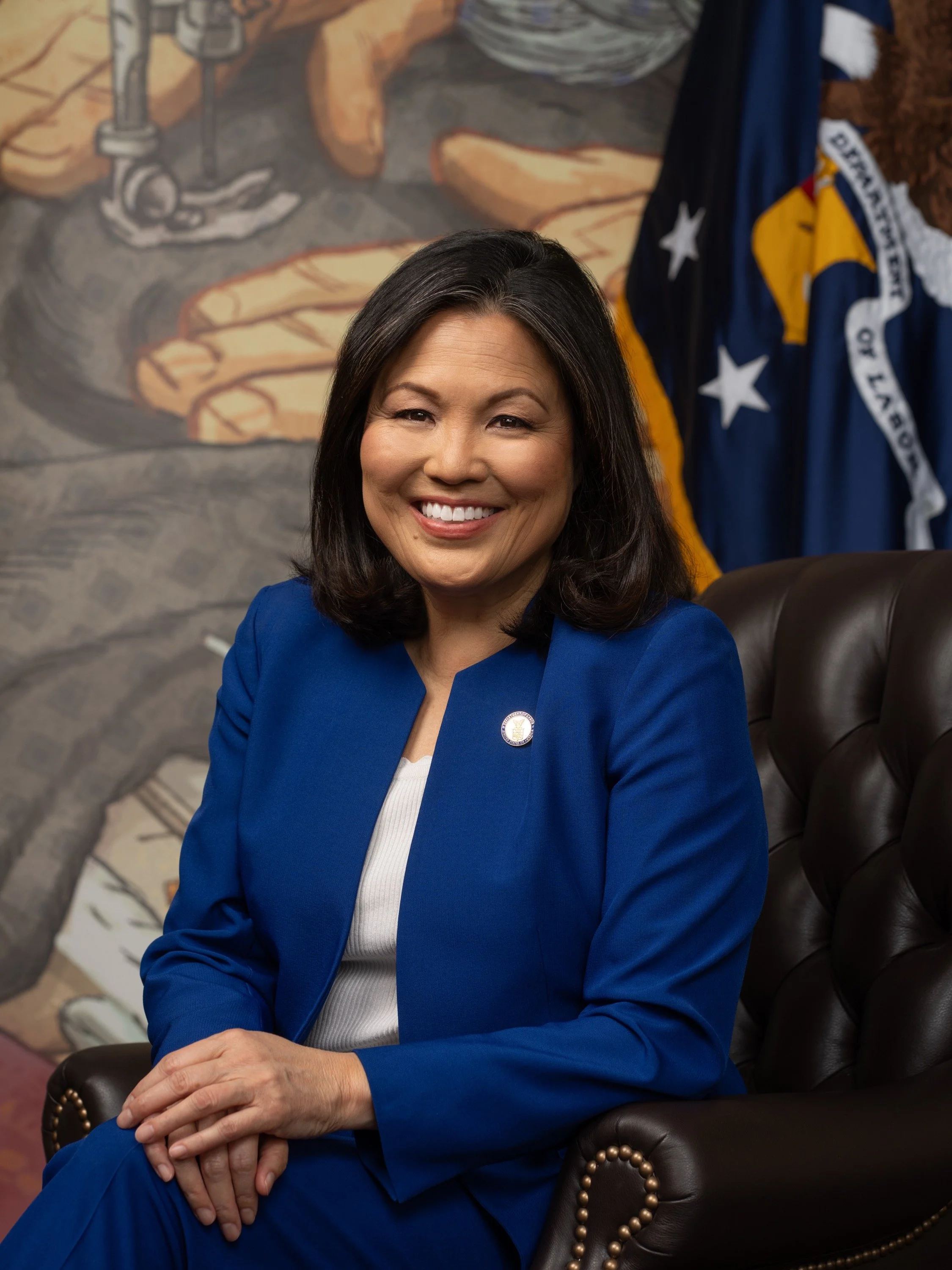
SOCIAL JUSTICE AND ADVOCACY HAVE BEEN JULIE SU’S CALLING since her youth. As an undergraduate student at Stanford University studying political science and economics, she participated in a peaceful student-led takeover of the dean’s office to protest the lack of diversity in their curriculum, specifically the lack of Asian American studies. Around the same time, she knew she wanted to work for an Asian American organization that was making a national impact, which led her to write a letter to OCA in 1989—then known as the “Organization of Chinese Americans”—asking if she could volunteer. OCA didn’t have a formal internship program at the time, but the organization gave her a chance to intern with them that summer.
At OCA, she conducted research, wrote articles, and assisted OCA’s executive director Melinda Yee wherever she could. “It was incredible to observe her as the only Asian American and only woman of color in the room,” Su recalls. Her experience with OCA gave her a firsthand account of the importance for the Chinese American and Asian American community to tell its own stories, advocate with their own voices, and to have a seat at the table.
Like so many children of immigrants, Su grew up translating for her parents. She realized that law is a language, and those who speak it get to decide who gets what in our society: who gets to work, migrate, march, marry, vote, and so much more. This was why, after graduating from Stanford, she went on to study law at Harvard University—to become a “translator” for those who were marginalized, discriminated against, and exploited.
After law school, Su returned to California to work as an attorney at the Asian Pacific American Legal Center (now called Asian Americans Advancing Justice Southern California), jumpstarting her longstanding career fighting alongside workers for justice and ending exploitation. There, her focus was on advocating for corporate responsibility for low-wage workers who toiled in sweatshops. One of the most memorable experiences from her time at APALC was when she led a case on behalf of Thai garment workers who had been trafficked into the U.S. and forced to work behind barbed wire and under armed guards, which resulted in stronger state laws for corporate responsibility in the garment industry, T and U visas passing to protect survivors of abuse and human trafficking to speak up, and the creation of a template for up-the-chain liability in subcontracted industries. “The workers became advocates and spokespeople—true heroes in the Asian American community,” she proclaims.
Julie Su (right) at her office with two of the Thai garment workers she represented
After 17 years at AAJC, Su was appointed by Governor Jerry Brown to serve as California’s labor commissioner from 2011 to 2018, then appointed by Governor Gavin Newsom to become California’s labor secretary from 2019 to 2021, before being appointed by President Joe Biden as the deputy secretary of labor in 2021, and finally serving as the acting secretary of labor after the resignation of Labor Secretary Marty Walsh in 2023—making her the only Asian American to serve as a cabinet secretary in the Biden-Harris administration.
As the acting secretary, she successfully led efforts to build worker power and union strength, negotiated historic contracts, expanded good jobs for all, and inducted the following heroes of American labor into the Department of Labor’s Hall of Honor: the Thai garment workers who had been trafficked into the U.S. and fought for corporate accountability; the Filipino farmworkers who helped build the United Farmworkers; the Bostock plaintiffs who helped expand protections for LGBTQ+ workers in the workplace by successfully arguing that LGBTQ+ discrimination is gender discrimination; and President Joe Biden, "the most pro-worker, pro-union President this nation has had,” she stated in a DOL press release.
30 years after her Stanford sit-in, a Republican senator brought attention to the incident during Su's confirmation hearing on her nomination to be the secretary of labor, alleging that such activities demonstrated she was too radical for a cabinet position. She disagrees with this assessment. “I believe my activism early in life helped make me willing to fight for people who are usually excluded from places of power and privilege,” she says. “And it actually helped to make me a more effective advocate for inclusion and justice—always remembering who is not in the room.”
Despite her storied career, the accomplishment Su is most proud of is her ability to remember where she comes from. “I am very proud that, for my nomination by President Biden, it was a true celebration of community with so many Asian Americans who came out.”
Julie Su (second from the left) and her friends and mentors (she calls them the “Asian American village”) at her confirmation hearing for U.S. Labor Secretary in April 2023