
OCA Intern Alum: Grace Chen
Interview by Skyler Murao / Written by Kent Tong
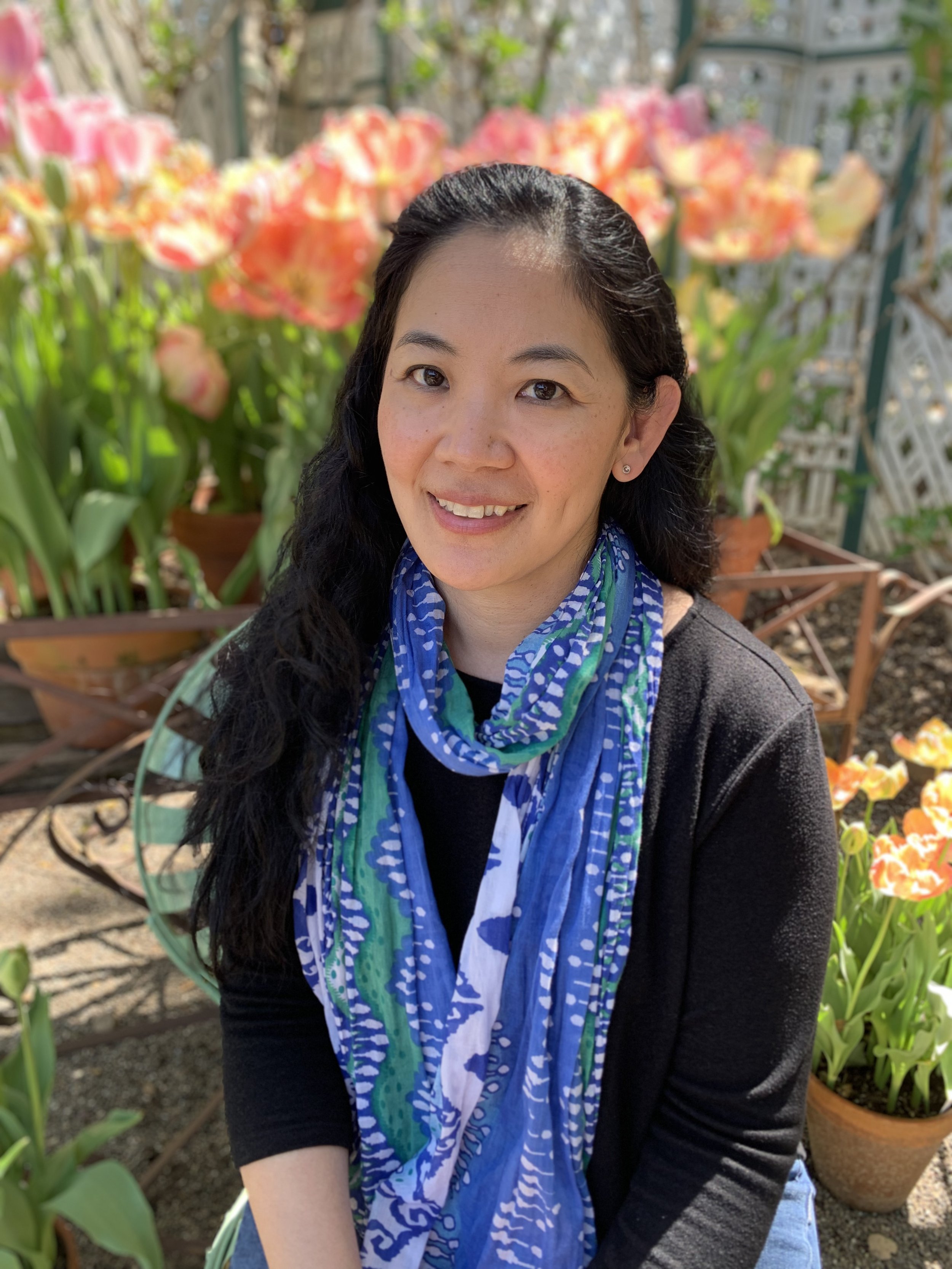
WHEN DR. GRACE CHEN WAS APPLYING TO GRAD SCHOOL on her path to earning a PhD in counseling psychology, her psychology major advisor questioned why she wasted her time doing a “random” internship for a national Asian American nonprofit during undergrad instead of focusing solely on research. At the time, the advisor’s words stuck in her head—he called it irrelevant. The OCA internship wasn’t psychology-related, so perhaps the advisor was right, she thought to herself. But during one grad school interview, the person on the other end disagreed. “The interviewer was like, ‘No, I think this looks really interesting and cool,’” Chen remembers. That was the moment she freed herself from her advisor’s words. To her, "social justice and civil rights” were not irrelevant to her work as a psychologist, and in the nearly three decades since her internship with OCA, she’s proven it.
Chen interned with OCA in the summer of 1997 when she was still an undergraduate student at Duke University. She had already known about OCA all her life because her mother was active in the local Chinese American community in Houston, Texas, including her involvement with the OCA – Greater Houston chapter. So, when she was accepted to intern at the OCA National Center in Washington, D.C., both her mother and the Houston chapter were excited—so much so that the chapter established an annual fund to continue sending local students to intern at the national office.
That summer in D.C., Chen worked on white papers, attended Congressional hearings, responded to anti-Asian hate incidents, and researched different topics, with the 2000 Census being a major one. She remembers the big debate at the time was whether the census should allow responders to identify as two or more races. While it makes sense to allow individuals with multiracial backgrounds to identify themselves as more than one race, many civil rights advocacy groups believed limiting responses to just a singular racial identity would allow them to advocate for more resources to be allocated to their communities. “I thought that was interesting to see the behind-the-scenes of identity versus political strategy,” she says.
Grace Chen (second from the left) and fellow OCA interns at OCA National Center in Washington, D.C.
Unlike many people who’ve interned for OCA, Chen was not particularly interested in advocacy from a political or policy standpoint—she was more interested in seeing it from a psychological perspective. “I think part of the draw for this internship for me is I’ve tried to be really interdisciplinary in how I think about Asian American mental health and psychology,” she says. Instead of trying to make changes at a systemic level, as a licensed psychologist, she wants to help people at an individual level. Based in San Francisco and operating her own private practice, her work primarily focuses on Asian American mental health and racism, supporting clients in resisting oppression and the pressure of grind culture (prevalent in the tech-dominated Bay Area). The OCA internship contributed to her understanding of history, culture, and racism, which she feels are crucial in her line of work. “It’s not just, ‘Don’t feel stressed because of the way you think about stuff,’” she says. “It’s more complicated than that.”
Grace Chen (center) reunited with her fellow OCA interns based in the Bay Area in 2024
But Chen has also ventured beyond the individual. Thanks to a multi-year grant funded by the California Department of Social Services, she and other Asian American psychologists, as part of the “Healing Our People through Engagement” (HOPE) program by the AAPI Equity Alliance, have developed a curriculum for community-based group intervention for Asian Americans to heal from racial trauma. This framework is based on one she learned from the Psychology of Radical Healing, a collective she’s a member of that views "radical healing” as the solution to racial trauma. The framework centers around collective healing, that it’s not just about bettering individuals, and the importance of political consciousness—understanding the history of racism, understanding systemic racism and oppression, but also empowering people to take collective action “to change the systems that are oppressing us,” she says. These conversations take place in group settings hosted by community organizations, where people can share their experiences with racism and are encouraged to have a sense of agency and make change together as a group.
All the lessons Chen’s learned throughout her life—the importance of diversifying your experiences, the importance of political consciousness in psychology—are lessons she’s tried to imbue in not only upcoming psychology students, but also her own teenage children. She’s co-authored a chapter on advocacy and public policy in an upcoming edition of Asian American Psychology: Current Perspectives to encourage students to broaden their perspectives outside of the field of psychology like she did. She’s told her own kids, “I think everybody should have a summer or some time in D.C. in college,” to understand the inner workings of government, lobbying, and advocacy organizations. Her summer interning for OCA in D.C. helped her connect with other Asian Americans who care about fighting racism and the different roles everyone can take to contribute to social justice. “Connection is so crucial for our well-being,” she says. “Healing is a collective thing.”