
OCA Intern Alum: Cindy Dinh
Interview by Skyler Murao / Written by Skyler Murao and Kent Tong
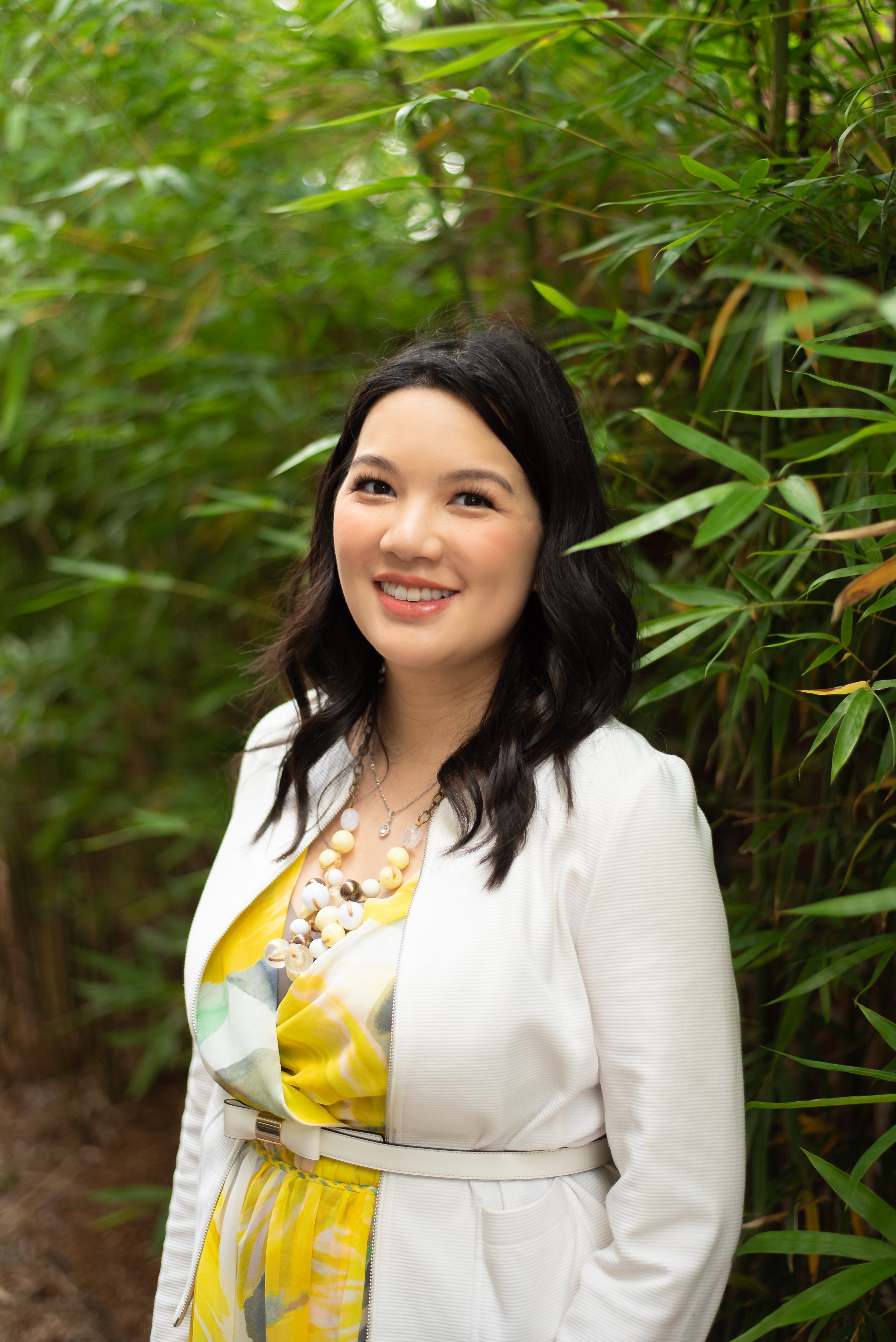
CINDY DINH WAS A FRESHMAN AT RICE UNIVERSITY when she saw a flyer promoting the upcoming OCA National Convention taking place in Washington, D.C. She hadn’t heard of OCA before but was determined to attend the convention anyway because she wanted to learn more about the Asian American community. Born and raised in Houston, Texas, she was never exposed to ethnic studies or any academia that was able to teach her more about her Asian American identity.
At the convention, she met Debbie Chen, then the executive director of the OCA – Greater Houston chapter, who encouraged her to intern with the OCA National Center in D.C., as well as consider joining the Houston chapter student board. She decided to do both: she served on the chapter board for the next three years and became a national intern in the summer of 2009. Though she was already accepted into two other programs that summer, Dinh chose to intern with OCA to meet more advocacy-minded young people, learn more about issues impacting Asian American communities, and engage in discussions about cultural identity. “I was still coming to terms with what it means to be Vietnamese American, born in the U.S. to parents who were refugees from the Vietnam War,” she says. “I hadn’t really found a sense of community yet.”
The internship proved to be foundational for her in two ways. The first was the program’s “campus action plan” component, which required interns to develop and execute an advocacy project on their college campuses. Dinh elected to advocate for an Asian American studies class, which hadn’t been offered at Rice for over 10 years. She collected student signatures and petitioned to the head of the Asian Studies Department for an Asian American studies course. Her efforts were rebuffed, but she persisted. The next year, there was a new department head, and she tried again—this time, she was successful.
Cindy Dinh (center) with fellow OCA summer interns and Rep. Mike Honda (D-CA) at the 2009 OCA National Convention in San Francisco, CA.
The second was set by the internship program’s “advocacy day,” in which Dinh and the other interns developed fact sheets and met with members of Congress to advocate for various causes impacting the Asian American community. She was able to bring these skills back to Houston when the local Vietnamese American community was concerned about human rights violations perpetuated by the Vietnamese government against public dissenters. She helped draft a petition, collected signatures, scheduled meetings with congressional offices, and sent buses filled with senior citizens to D.C. as part of a “Vietnam Advocacy Day” hosted by the nonprofit Boat People SOS. This was the first time these community members were at the capital, much less meeting with members of Congress and their staff, so her internship experience and Vietnamese American background were crucial. “Being bilingual [in English and Vietnamese] and bicultural, I was able to literally navigate the group through the halls of Congress, provide them a preview of what to expect at the meetings, introduce the group and our purpose, and follow up with the congressional staff, even though I was the youngest member of the group,” she says. “I felt like I could contribute something based on my experiences through OCA—it’s amazing.”
Cindy Dinh testifying at the California Assembly for Assembly Bill 2455, the Student Voting Act with the bill’s co-sponsor San Francisco-based Assemblymember David Chiu in 2016. He selected her proposal through his “There Ought to Be a Law” program, which allows people to submit ideas for legislation.
After earning her bachelor’s degree in sociology and health policy from Rice, Dinh went on to earn a dual degree: a J.D. from the University of California, Berkeley, and a master’s degree in public administration from Harvard University. She chose to study law to understand more about rules and regulations and studied public policy so she’d have the skills to actually change them. “You don’t have to have a certain degree” to be an advocate, she says, “but it’s a lawyer who can actually write and draft a lawsuit to stop a law from being enforced if it was unfair or unconstitutional, or to ask a court to intervene . . . you need both [skillsets].”
Over the years, Dinh has represented pro bono clients seeking asylum referred by Tahirih Justice Center and Kids in Need of Defense, worked with Texas State Representative Gene Wu to successfully pass a bill to ban deceptive practices that allowed mail advertisement to resemble letters from government agencies, and proposed an ultimately successful bill to grant automatic voter registration to college students in California when they registered for class. She was a commercial litigation associate at Mayer Brown LLP and at Susman Godfrey LLP before assuming her current role as a corporate counsel at Sumitomo Corporation of Americas. But one of her proudest moments was when she was a legal clerk for the Honorable Gray H. Miller in the U.S. District Court of the Southern District of Texas, where she was invited to deliver a keynote speech to over 2,000 new American citizens at their naturalization ceremony.
Freedom and democracy are values she holds tightly because her own parents fled a government where these rights were not upheld. To honor their history, Dinh seeks to contribute in any way that she can to elevate the voices of immigrants, of voices who can’t speak for themselves, whether it’s due to their limited English-speaking abilities or their unfamiliarity with U.S. governmental institutions. “There’s a lot more that I would like to do to connect immigrant communities to mainstream American society,” she says. “Being able to be that cultural broker, I would say, is meaningful to me.”