
OCA Intern Alum: Anthony Tran
Interview by Skyler Murao / Written by Skyler Murao and Kent Tong
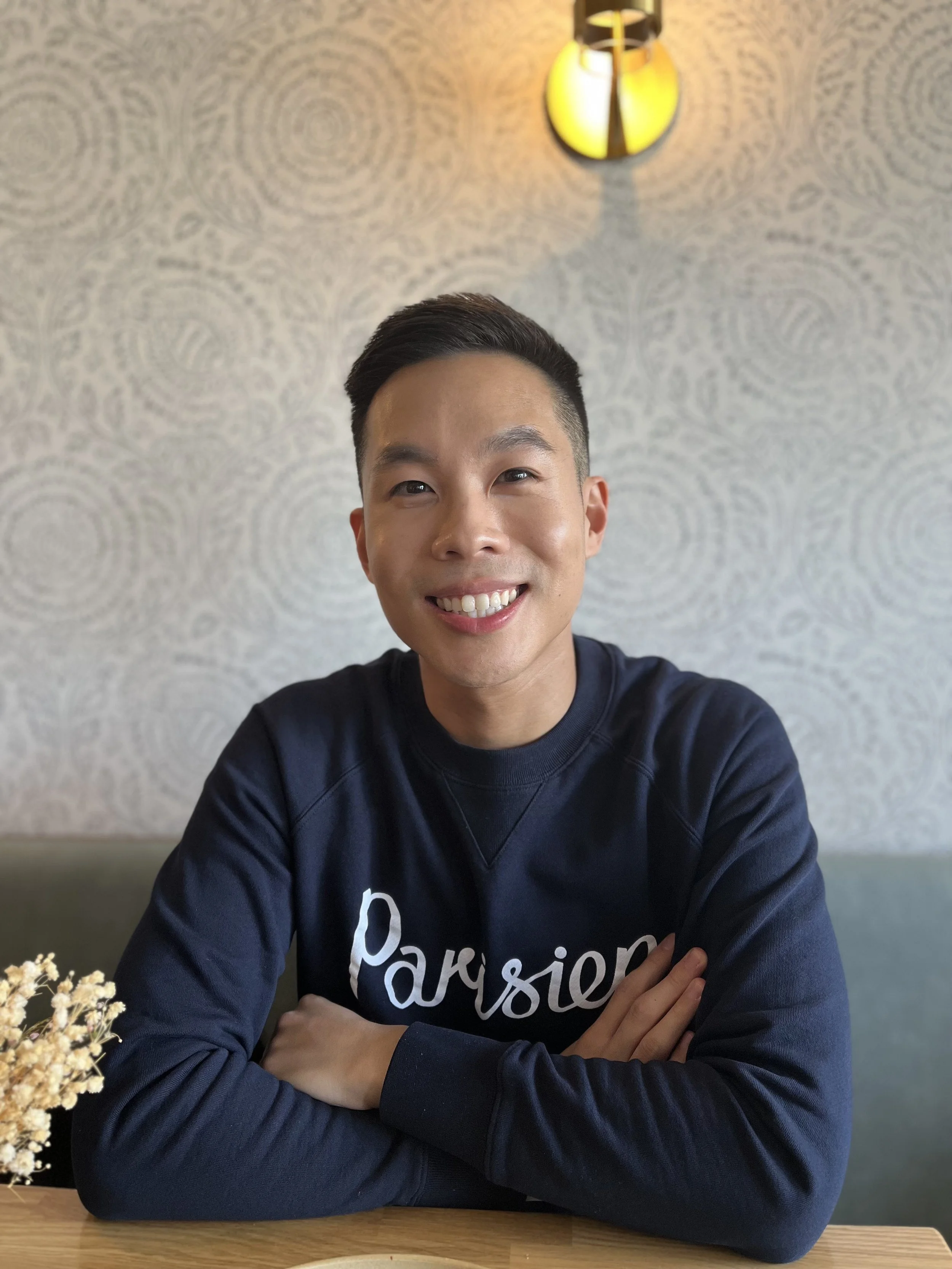
A YEAR AND A HALF INTO HIS ACADEMICS studying biochemistry at the University of Pennsylvania, Anthony Tran finally admitted a truth to himself that he’d been keeping at bay—research is kind of boring. He didn’t enjoy how isolating the field was, that you can be so far removed from the actual impacts of your work, that it takes many years of trial and error before a study can conclude. But he remembered taking an English class his freshman year that piqued his interest. It was a course within the Asian American Studies program, and it’s how he learned about the Racial Triangulation Theory, the Perpetual Foreigner stereotype, and other issues related to Asian Americans. “I just remember thinking, Wow, this is both really interesting and also resonant with my life experiences,” he says. He switched his major to urban studies, hoping to explore ways to make tangible change in society.
As a native of Arlington, Virginia, Tran was familiar with some of the major national Asian American nonprofits in nearby Washington, D.C. He applied to OCA’s summer internship program because of its wider selection of placement offices that weren’t focused only on the Hill or federal agencies. He was accepted into the program’s 2012 cohort, where he was placed to work at the National Coalition for Asian Pacific American Community Development (National CAPACD), a nonprofit comprised of a coalition of over 150 community organizations fighting against the gentrification and displacement of Asian American, Native Hawaiian, and Pacific Islander communities; his placement at National CAPACD was an especially good fit given his academic interest in urban studies and immigrant communities. He supported their policy and communications work, but the main assignment he had that summer was—because it was an election year—helping to organize a nonpartisan voter outreach project, distributing materials to member organizations, and training these organizations on how to engage in voter outreach in their local communities.
The OCA internship helped Tran learn what it’s like to work in advocacy, understand issues impacting the Asian American community, and the importance of coalition-building between different communities. It inspired him to advocate for issues that are broader and affect many different populations that, in turn, will also benefit Asian Americans. “Sometimes, being very narrowly focused, you can be devoting a lot of effort towards something that might not pay off in the end,” he says. He decided to pursue law with the goal of becoming an immigration lawyer. Immigration is an issue very personal to him, as his parents are refugees from Vietnam who left the country after the Vietnam War. "Given my personal background, I believe immigrants are fundamental to our society,” he says, “and immigrants to the United States should have the ability to lead safe, healthy, and just lives with equal access to opportunities.”
After earning his J.D. from the Georgetown University Law Center, Tran spent three years working at immigration law firms, primarily helping businesses navigate legal policies to bring overseas workers to the U.S. But the years spent as an immigration attorney left him unfulfilled—he wanted to not only help people, but create enduring, broad-based impacts in a mission-driven way. In 2019, he left the field to become an attorney at the U.S. Department of Labor.
Anthony Tran reunited with two of his fellow OCA interns, Christina Bui and June Kao, during the intern alumni reception at the 50th anniversary OCA National Convention in Washington, D.C. (July 2023)
Today, Tran is a senior attorney at DOL, where he supports workforce development and job skills training programs with the goal of helping American workers not only get better jobs, but dignified jobs. “I’m interested in ensuring that people of all ages, from all backgrounds, have the necessary skills and training to get the jobs that they want and to ensure that those jobs are actually good jobs, jobs that have living wages, jobs that are safe, jobs that provide benefits,” he says.
Even now, over ten years since his OCA internship, Tran finds surprising ways the things he learned from the OCA internship can be relevant to his day job. He remembers, while working on the development of a federal grant program that was open to a wide variety of entities, including minority-serving institutions like historically Black colleges and universities, there was no mention of Asian American and Native American Pacific Islander-Serving Institutions (AANAPISIs), which he learned about during his internship. So, he made an effort to address this discrepancy in the grant program and ensure their inclusion.
Reflecting on his personal and professional journey thus far, Tran is happy with how far he’s come. Neither of his parents graduated college, and he had to learn how to navigate college and law school on his own. “For lawyers and the legal profession, a lot of times people have connections, whether it’s family or friends," he says, people who can mentor them through the endeavor. “Personally, I didn’t have any of that—I had to strike it out on my own.” He recognizes that becoming a lawyer may fit an Asian American stereotype, but he’s proud that he was able to successfully navigate unfamiliar territory on his own and feel fulfilled.