
OCA Intern Alum: Andrew Chang
Interview by Cassie Micah / Written by Cassie Micah and Kent Tong
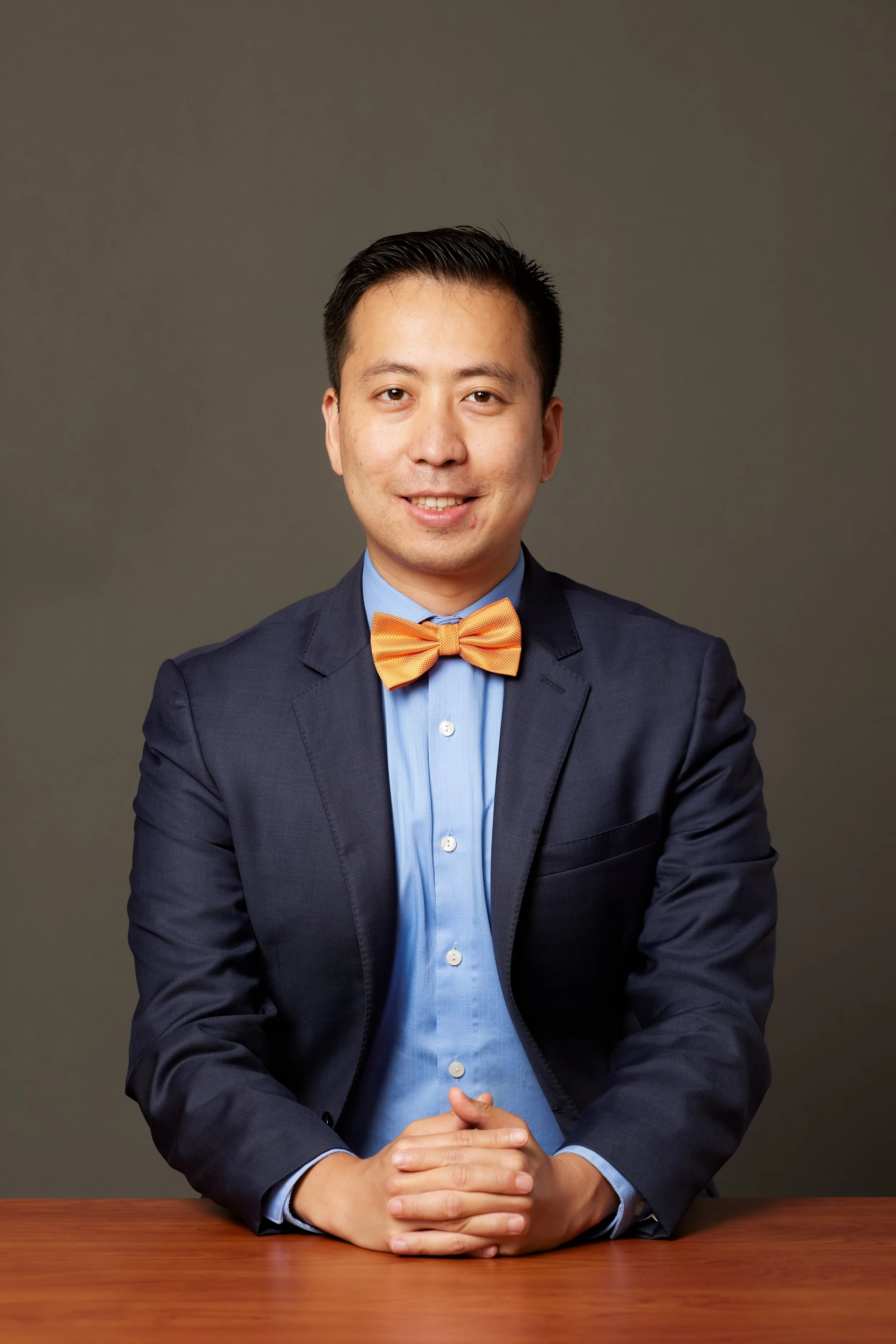
IN 2008, WHILE HE WAS AN UNDERGRADUATE STUDENT AT THE GEORGIA INSTITUTE OF TECHNOLOGY, Andrew Chang attended an APIA-U: Leadership program hosted by OCA at the University of Florida. He likens the program to an Asian American studies course, where he was able to learn about Asian American history, from the first Filipinos to set foot in America (over 30 years before the Pilgrims) to the Chinese laborers who built this country’s railroads—things he never learned in school. “It was basically, Who is this community?” Chang says. “What have they done, what are they doing now, and how are they affected since they are a part of the fabric of this country?” As a student on a campus with so few Asian Americans, Chang felt the need to uplift Asian American voices and ensure the community had a seat at the table, and the program inspired him to become an OCA intern in Washington, D.C. in the summer of 2009.
Andrew Chang (right) with MOAPIA staff at their "Share a Smile, Give a Toy" holiday toy drive and open house in December 2011
During the OCA internship, Chang worked in the Policy and Quality Control Division at the Department of Transportation’s Office of Civil Rights. After a fulfilling summer taking in everything he could—learning how government operated, meeting Transportation Secretary Ray LaHood, and speaking with Stuart Ishimaru, the acting chairman of the Equal Employment Opportunity Commission—he knew he wanted to come back. After earning his M.A. in political science from the University of Florida in 2011, Chang returned to D.C. full-time, serving as a staff assistant at the D.C. Mayor’s Office on Asian and Pacific Islander Affairs (MOAPIA) and then as their community outreach specialist and public information officer. He coordinated partnerships with local AAPI organizations on efforts related to employment assistance, voter registration, and LGBTQ issues. During this time, he also found himself on the opposite side of the OCA internship by supervising three OCA interns placed at MOAPIA. “That was pretty cool being able to have a direct impact on the lives of others in terms of mentorship and guidance as an internship coordinator,” he says.
After nearly four years at MOAPIA, Chang needed a change, believing he’d learned everything he could from D.C. He appreciated that the city was progressive but knew that not everyone in the country was as “open-minded." (He calls it “a bubble.”) So, he moved to New York City to broaden his experiences. His first job there was as a development and communications associate for Volunteers of Legal Service, a nonprofit that works with community organizations, local businesses, and law firms to provide free legal services to New Yorkers with limited resources. And since 2017, he’s been serving as a community liaison at the Manhattan Borough President’s Office, where he addresses quality-of-life issues of constituents in Lower Manhattan.
While he says there are some similarities between working in the U.S. Capital versus the Empire State—effective change from the government can be slow—Chang says New York is more intense. Over 12 times the population of D.C., a city of this stature has over 50 councilmembers, five borough presidents, the mayor’s office, the city comptroller’s office, the public advocate’s office, and hundreds of competing opinions representing over 60 different constituent groups. “It’s hard to find a solution that satisfies most community groups,” he says. “There’s always going to be someone unhappy.” The AAPI community is also much larger in NYC (approximately 16% compared to 4% in D.C.), so AAPIs in New York have more political power, and their votes are “taken a lot more seriously,” he says. But with so much diversity within the city’s AAPI community (it’s home to over 30 AAPI ethnic groups who speak more than 50 languages), he believes one must understand the nuances of not only the different AAPI ethnic groups but also generational differences between long-time AAPIs who’ve lived in the city for over 50 years and newer immigrants who have different views on issues. “There’s no one singular AAPI community,” he says. “There’s no one Chinese American community—there’s like 20 of them.”
Andrew Chang (left) with OCA — New York general and board members at the OCA National Convention in Seattle, WA in July 2025
Chang has been involved with the OCA – New York City chapter since 2017 and has been serving as their executive vice president since this year, supporting the organization’s programs, including: self-defense classes, voter engagement work, and their signature Hate Crimes Prevention Project, a diversion program for youths who’ve perpetuated hate crimes, in lieu of prosecution. He remains committed to OCA, an organization that gave him his first peek into the inner workings of government, his first exposure to the national AAPI community, and to a large network of AAPI advocates. As a Chinese kid from Jacksonville, Florida, he’s always sought to meet people of different backgrounds than him. It’s why he went out-of-state for undergrad, why he interned and later moved to D.C., then New York. It’s why he’s been an avid traveler the last ten years, visiting countries he's never been to before, like Qatar, Costa Rica, Colombia, Thailand, and France. It’s why he speaks four languages (English, Mandarin, Shanghainese, Spanish). Immersing himself in different cultures in both his personal and professional capacities has shaped him into a stronger public servant who’s able to better address the needs of as many communities as possible.